


Made in Dagenham: 40 years on from Equal Pay Act there is still much to be done to remove the gender gap
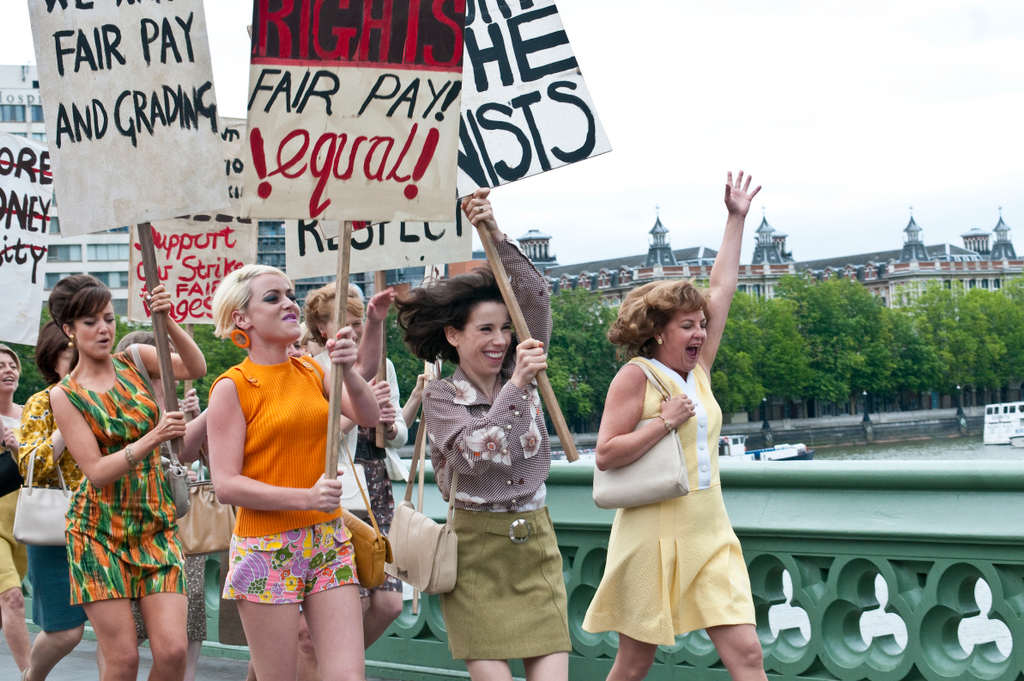 The recently released UK film, Made in Dagenham, takes us back to 1968 and tells the story of 187 female Ford sewing machinists who went on strike to secure pay that equalled that of their male colleagues.
The film reflects the view (among some) that the man of the household was the breadwinner while the woman’s primary role was to keep the house and look after the children.
Women’s work was considered less important than that of men and the money they earned was often considered pin money. There was no law stating that women should be paid equally.
Barbara Castle, then secretary of state for employment and productivity, became involved in the negotiations between the women and US car maker Ford. A deal was brokered that resulted in the women getting an immediate pay rise to 92% of the wage earned by semi-skilled male colleagues.
However, it was the Government’s commitment to the women that legislation would be passed requiring equal pay that was the real victory.
The Equal Pay Act 1970 came into force on 29 December 1975. It now stipulates that women should receive the same rate of pay as men who undertake work of equal value or work that is considered to be equivalent.
Nevertheless, there continues to be a difference between the average earnings of men and women.
A report published earlier this week by the UK’s Equality and Human Rights Commission states that although the gender pay gap has reduced, women today still earn 16% less than men. Worryingly, it also reports that there are signs that progress is slowing.
This is evident in the annual statistics produced by the Employment Tribunal service. From 1 April 2009 to 31 March 2010 37,400 equal pay claims were brought.
Although significantly less than the 62,700 claims brought in 2007/2008, it still represents more than the total number of claims brought for sex, race and disability discrimination.
With effect from 1 October 2010, the Equal Pay Act 1970 has been repealed and most of its provisions are now found in the Equality Act 2010. There is a move to create greater pay transparency. For example, pay secrecy clauses are now unenforceable so employees are able to discuss their remuneration to establish whether any differences in pay exist.
The women who were employed at the Ford plant in Dagenham could not have known just how significant their decision to strike would be. The reality is, however, there is still a great deal of work to be done to remove the gender pay gap completely.
More on this article from the HR Magazine.
This film itself isn’t very good, but what’s worse is the way its suposed political sentiment has been used as pro-UKFC propaganda: http://bit.ly/aMDsxj