


Breast isn’t always best for mum
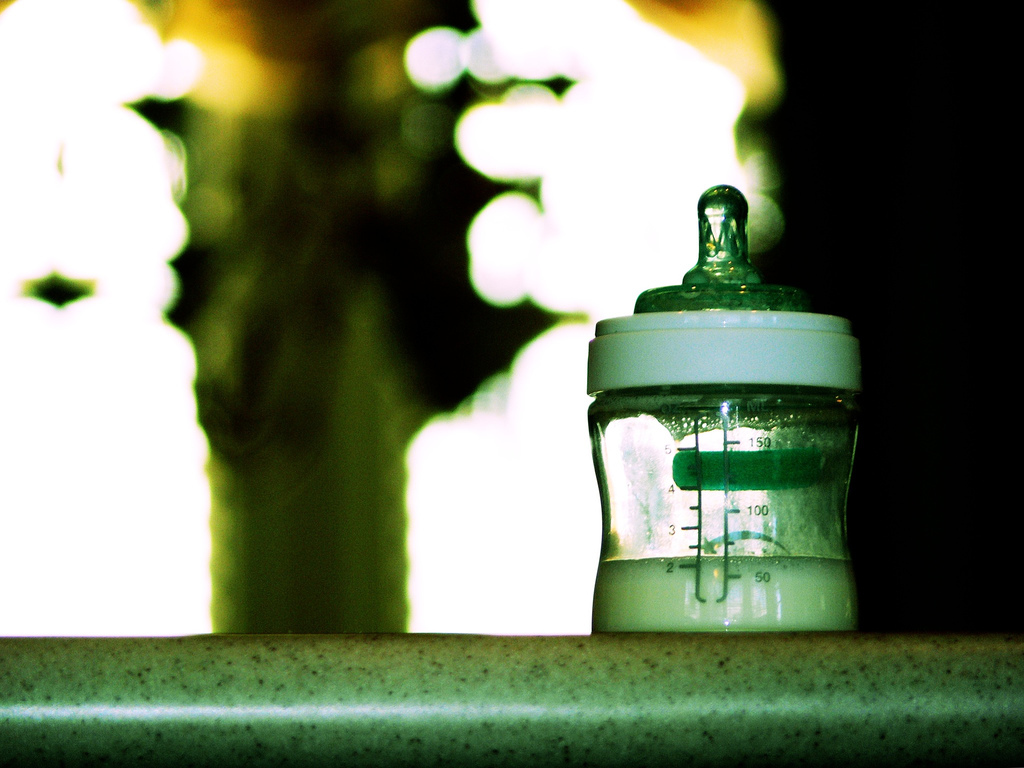 Help needs to be about finding the right way for a mother to feed her child.
The general consensus is that in the majority of cases breast feeding gives a baby the best possible start in life.
So what happens when breast feeding simply doesn’t work for a mother and her baby?
I spoke with two mothers who had quite different experiences but for whom breast feeding definitely wasn’t best.
Before the birth of her daughter, Claire was open-minded about breastfeeding.
“My gut feeling was that it wouldn’t be for me, but I decided to give it a go anyway,” she said.
She didn’t feel under pressure from family or friends to breast or bottle feed and her husband was supportive of whatever decision she made at the time.
But when her daughter was born with blood sugar levels were already low, Claire explained, she was told that they had to get food into her ‘ASAP’ – and eventually they fed her an ‘emergency bottle of formula’.
“The midwives were squeezing my nipples like I was a milk cow…all day long I was passed from one midwife to another to be milked!”
Not quite the introduction to breastfeeding exhausted new mothers hope for, but a surprisingly common experience.
Claire breastfed her daughter for two days in the hospital, and although it started out well, her nipples soon became cracked, sore and bleeding – a common side effect – and her daughter wasn’t getting enough milk.
With the support and help of one of the hospital midwives Claire decided to switch to bottle feeding.
The midwife, Claire recalled, said that she “wasn’t going to get funny about me deciding to go to bottles as she would rather see happy mums and babies than stressed-out ones.”
Claire clearly appreciated the health benefits and advice about breastfeeding, and indeed that was why she tried at the start and made an effort to get her daughter the first few days of essential colostrum.
But she also feels comfortable with her decision to switch to a bottle, and she agreed with her midwife that a stressed out, unhappy mother is more of a problem for the baby than the potential long-term benefits of breast milk.
Laura breastfed her first son for two weeks exclusively, but found it a distressing time.
Contrary to what we’re so often told, this ‘natural’ way of feeding your child is by no means an easy or simple process.
Like Claire, Laura quickly found herself suffering from sore nipples and every time he latched on it was, in her words, agony.
And she felt a lot of pressure from the media, the health professionals and every book she picked up about newborns and caring for your baby.
The stress of being a brand new mother, combined with the inevitable exhaustion of birth, as well as recovering from a poorly stitched tear that had occurred during the birth, knocked Laura’s mood and confidence.
She feels that she received no support in the hospital at the time of the birth, and later the health visitor gave her the impression that mixed, or combination feeding of formula and breast milk was as ‘bad’ as just formula feeding.
“At the time it all felt such a big thing and I felt my ability to breastfeed my baby was a reflection on my overall ability as a mother. I felt so awful about it all for months and months.”
Laura feels that the NCT classes she attended prior to the birth of her son had painted breastfeeding in an unrealistic way, making it seem ‘easy’ and ‘natural’ which compounded her feelings of failure.
Two weeks after the birth Laura telephoned a breastfeeding counsellor who told her the whole experience, including the agonising mastitis was perfectly ‘normal’.
Needless to say, this did little to improve her mood and she decided that enough was enough.
“It was a very low moment for me and [my son] was only 2 weeks old. I couldn’t shake off the feeling that I had failed him. Every time I bottle fed him in public I felt such a failure and that people would be making judgements.”
Despite this awful first experience, when Laura’s second boy was born she decided to try again, and armed with a lot more, realistic, knowledge and advice, found the experience was a lot more positive.
He was a very hungry baby, as many breastfed babies are, and when he lost a little weight the health visitors suggested introducing a daily bottle, which worked well, without having the slightest negative effect on how he fed or how much milk Laura produced.
But even with the extra bottle, her baby still demanded a lot from her.
“I was still up all night feeding him and survived on about 3 hours sleep but I was determined to give it a go. I enjoyed breastfeeding and I felt like a ‘proper’ Mum!”
Then, after three months of looking after a baby and a toddler on so little sleep Laura decided it was time to switch to bottle feeding.
Not without guilt, but she knew that she had done the best she could possibly do.
“Literally the day that I started to formula feed him he changed into a content and chilled baby and he slept 7 hours through the night. My sanity began to return and I began to really enjoy being a mummy to two children.”
The health benefits of breastfeeding for the baby – and to a lesser extent the mother – are impressed upon mothers-to-be at every turn, but little consideration is given for what happens when it doesn’t work, when it isn’t so easy or when it is not the right thing for both, when breast simply is not best.
We need to find the right balance between encouraging the best, healthiest start for babies and their mothers, but not set up those same mothers for a fall.
Help needs to be about finding the right way for a mother to feed her child, as opposed to ‘support for breast feeding’ or ‘support for bottle feeding’.