


Young women still being let down
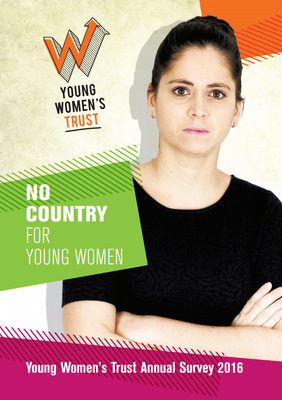 New survey sheds light on what the government’s priorities should be.
The Young Women’s Trust’s annual survey for 2016, ‘No Country for Young Women’, has revealed a generation of young people despairing and anxious, many of whose lives are on hold because of serious financial, work and housing problems – and young women hit hardest, and are faced with shocking discrimination.
Three in 10 young women (30 per cent) said they experienced sex discrimination when working or looking for work.
Seven per cent of young women said they were treated less well than others when working or looking for work because they turned down sexual advances.
Forty per cent of BAME young people said they have been discriminated against when working or looking for work because of their ethnicity (compared with 5 per cent White).
And 1 in 12 parents aged 18-30 reported having to use a foodbank to survive.
Drawing on findings from a major poll of 4000 18-30 year-olds carried out by Populus Data Solutions, the survey also showed that low paid, insecure work is a major problem for young people.
Thirty per cent of young people have been offered a zero hours contract – 32 per cent of young women, 28 per cent of young men.
More than 1 in 5 young people (22 per cent) have been paid less than the minimum wage (23 per cent of young women, 20 per cent of young men).
Over a quarter of young people in work (28 per cent) are worried about not having enough paid hours (30 per cent of young women, 26 per cent of young men).
Almost 4 in 10 young people in work (38 per cent) are worried about their job security.
It revealed that young people in work from the lowest socio-economic group DE and from Black, Asian, and minority ethnic (BAME) groups are more likely than others to be worried about their job security (43 per cent DE, 44 per cent BAME) and not having enough paid hours (47 per cent DE, 39 per cent BAME).
And 39 per cent of young women said it was a struggle to make their cash last to the end of the month, while 27 per cent of young women said they are in debt all of the time, and one quarter of 18-30 year-olds had to move back home with their parents because they couldn’t afford to live independently.
The Young Women’s Trust wants to see a minister in central government with responsibility for overall youth policy, including employment, and a commitment from the government to extend the ‘National Living Wage’ to under-25s.
Young people said their top concerns were housing, followed by unemployment and pay/job security.
These, the Trust said, must all be areas of concerted focus by the government.
Tackling the discrimination that many young people are facing because of their age, gender and ethnicity must also be a priority.
Young Women’s Trust aims to support and represent women aged 16-30 struggling to live on low or no pay in England and Wales and who are at risk of being trapped in poverty.
This report is based on the findings from the Young Women’s Trust’s most comprehensive survey and does not attempt to set out detailed policy solutions, although it does shed light on what the government’s priorities should be.
To read the full report, click here.