


Palestinian cleaners experience gender pay gap too
 Recent films like ‘Made in Dagenham’ bring to the attention of the younger generation of feminists, like me, just how long women have been fighting for equal pay. They also serve as a shocking reminder of how far we still have to go to bridge the gender pay gap.
But, whilst popular culture may portray this issue as the preserve of the ‘Western’ feminist, Vicky Cann of the TUC tells a different story.
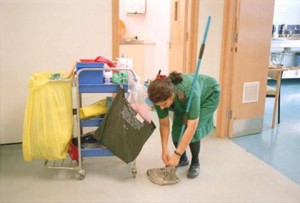
On a recent visit to Nablus, in the West Bank, Vicky met with two hospital cleaners – Hassan and Sahar. Earning just 250 Jordanian dinars a month, it is clear that Hassan struggles to support his mother, sister and wife, on his low wages, especially given the high cost of consumable goods in Palestine.
But the injustice of the low pay of cleaners in hospitals in the West Bank is brought into even sharper focus when Vicky meets with Sahar, a cleaner in the same hospital and a widow of 10 years with two children to support. Sahar earns only 170 Jordanian dinars each month – 68 per cent of what Hassan earns. Speaking about her situation, Sahar said:
“Cleaners get paid different amounts here. If you are a married man with children, you get an extra 10 dinars a month for each child. But the families of women do not get this extra payment.
“I have told them about this and I am told that they cannot help because I fall outside of the system. I don’t feel secure and I don’t have stability. I feel that I could lose my job at any moment.
“I feel that it is unfair and unjust, but according to our daily life needs, I have no choice and I have to be patient and just handle the work.”
Until recently, the hospital where Hassan and Sahar work was the only remaining health sector workplace in Nablus that didn’t have an organised trade union presence.
However, thanks to pressure from the health sector union and a worker’s committee founded at the hospital, things are beginning to change. The hospital’s management are now allowing workers to hold meetings where they can discuss labour rights and learn to negotiate their pay and conditions.
To read the full story, visit the TUC’s website.