


Living Dolls: the hijacking of female sexuality
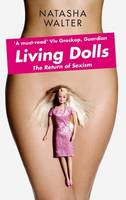 By Sheree Sartain
WVoN co-editor
Several years ago I was teaching Women’s Studies to first year undergraduates.
The aim of the course was to raise awareness and challenge preconceptions about women and their role in society.
The students were a mixed bunch. Some thought the subject would be an easy option
Like all education, if you don’t engage with the material you can breeze through it and emerge at the other end knowing facts but, in reality, be none the wiser for your experience.
This was no different for my students who could be divided into two groups: those who believed and those who didn’t.
The believers thought that women’s experience of life, the universe and everything was different from that of men and that the differences were socially constructed as well as being discriminatory.
This group was usually made up of mature students and one or two politically aware teenagers.
The non-believers thought that although women had experienced discrimination in the past, all this was now history – they believed women today can do what they like, achieve their goals and compete on a level playing field when it came to opportunity and employment.
This group were usually in their teens or early twenties from well-off backgrounds. They had been to good schools and by and large their parents belonged to the professional middle class.
When you spoke to them about their experiences, they had, in the main, not experienced any direct gender based discrimination.
They had done well at school and they felt they had achieved because of who they were regardless of their gender.
In many ways, for them, gender was irrelevant unless it related to their social life.
This group really worried me. For them, feminism was a world view that had become redundant. The fight was over, equality was won – they wanted to treat it like a history lesson and move on.
Thankfully, this is a view that has yet to predominate and the discussion continues with female sexual objectification at the forefront.
Living Dolls: The Return of Sexism by Natasha Walter gives me hope that there are women willing to take feminism forward.
I don’t know Natasha Walter – I have read many of her articles but I suspect that like many of the students I met, she too thought that the fight for equality was over or at least, nearly over.
I didn’t agree with Walter’s optimism when she wrote The New Feminism.
Now, more that a decade later, Walter has changed her mind and her new book presents a deeply depressing picture of sexism in the twenty-first century.
Instead of the progressive equality that appeared so promisingly on the horizon in the 1990s the new century has brought with it a pernicious sexism that lurks beneath the guise of female empowerment.
Walter identifies the two strands of this oppression as covert sexism and the re-emerging claims of biological determinism.
Female sexuality – liberated by the tenets of second-wave feminism – has been hijacked.
Now, female sexuality is shaped by the sex industry and women are defined by their sexual allure.
Instead of viewing our hyper-sexual culture as proof of women’s growing freedom and power we should be challenging the ‘hard-wiring’ argument of determinism and rejecting breast enhancement, lap-dancing and Bratz as representations of female empowerment.
Some of us knew this already. We know it because what is blazoned for all to see is a very specific form of female sexuality – mainstream, young, hetero, lacking in body hair, beautiful and perfect – no space for disabled, aged, lesbian, trans or hairy sex here.
It might be a little late, but Walter has given lie to the rhetoric by recounting the experiences of individual women.
But, worryingly, she also identifies women as complicit in creating and selling a culture of female sexuality that once was made only by and for men.
Along with Walter, I am deeply troubled by these developments.
How far have we come if it is now thought to be perfectly reasonable for an employer to ask that you shave your pubes, get a fake tan, dye your hair, sort out your nails and pluck your eyebrows? As Ellie experienced at her interview to become a lap dancer.
Far from feeling empowered, Ellie said she had to get drunk before she could face work.
Walter challenges the rhetoric that it is a woman’s choice to become a pole dancer or topless model and she does this by confronting us with the experiences of women.
She makes a strong argument that sex work – from pole dancing to prostitution – has become legitimate employment in the new hyper-sexual culture, creating a form of sexuality which ensnares all women.
This is also a culture where the boundary between looking and touching has become blurred and women are inevitably exploited.
The hyper-sexual culture does not only affect sex work but has consequences in everyday life.
Angela started Internet dating when her marriage ended.
She found that the dating scene had changed and relationships were no longer equal or pleasurable.
Instead the imperative was sex but what sex entailed had also changed.
Threesomes and anal sex were the norm expected by men she had only just met.
The ‘liberation’ that Angela experienced was in fact with the rhetoric of female sexual empowerment that owed little to female sexuality and much to the sex and porn industry.
Darker images emerge from Walter’s investigation of online ‘ratings’ sites for prostitutes where the reviews of ‘services’ made by male clients are misogynistic and hateful, reflecting the pain, degradation and objectification experienced by the women and adding to the direct violence and abuse they endure.
The free choice argument for working as a prostitute is surely undermined by the young age at which many women enter prostitution and the fact that many report previous experience of sexual, physical and emotional abuse within their families.
Sadly, the normalisation of sex work in a hyper-sexualised consumer culture has not empowered women but further commodified them.
Walter has produced a compelling and well researched argument. There are one or two places where her analysis could be improved but this doesn’t detract from the overall strength of her case that women’s lives are less free than we would hope and that empowerment isn’t about having silicone boobs and wrapping yourself, half naked around a pole for the delectation of men. Let’s hope it convinces the non-believers.
Living Dolls: The Return of Sexism, paperback 288 pages, published by Virago on 5 May 2011, £8.99
FIVE COPIES TO GIVE AWAY
We have five copies to give away to the first readers to write in to us (Alison.Clarke@womensviewsonnews.org) telling us why they want to read Living Dolls.
I loved this article (Living Dolls: the hijacking of female sexuality)! I had just assumed that as a 45 yr. old professional, conservative, Christian woman – that somehow I was missing the ’empowerment’ that women have gained over the decades by strip clubs becoming socially acceptable. And, as you note, silicone breasts being the norm for ‘beautiful’. This isn’t freedom, it’s oppression. What would our suffragist ancestors think of our modern ‘independence’? Yuck. I’m going to get the book reviewed in this article. Thank You so much!
That’s really great – thank you. I am pleased that you have found some kindred spirits and enjoyed the review.
‘Living Dolls’ is certainly worth reading.
Regards
Sheree
Loved this post. I look forward to reading Living Dolls. I’m pleased to read like-minded people as often I find I’m the only one who is perpetually angry, disgusted and demanding different values. Especially here in India where some women do recognise the attitudes but even they have chosen to meditate,ignore it and pray for the well being of perpetrators of nonsense instead of taking action.
Hi Kalpana,
Thank you for your positive feedback. I hope you enjoy the book.
Sometimes it is difficult to stand up for what we believe. I have been to India and while I was there I met many of women who have very difficult lives. I hope that in the future, their experience of gender inequality diminishes.
Again, thank you for reading
Sheree
I have read this and Kat Banyard’s book draws much the same conclusion as does Female Chauvinist Pigs. However, most young women are so terrified of the word feminism as it has been portrayed in mainstream media that they are less willing to identify themselves with this philosophy than men are towards paedophilia (according to a survey last year in some newspaper or other). Perhaps we should rebrand feminism as gender equality in the same way porn rebranded itself lads mags and start asking the press to talk about gender murder/violence/hatred in the same way they acknowledge race hate/murder/violence. Then, perhaps, we might start showing people how pervasive the problem still is in some men’s attitudes and behaviour.
It should also be said that some women are not given to empowering other women on so many different levels. I totally agree that the rise of lookism has led to women losing that feeling of solidarity-or sisterhood. I made an oath years ago never to support glossy magazines, gossip rags or tabloids. That’s how I took action against this.
I loved this book! Read an article about it in G2 magazine, bought the book straight away and have been on a feminist roller coaster ever since. Kat Banyard’s the Equality Illusion and Ariel Levy’s Female Chauvinist Pigs are also good reads and Vicki mentioned.
I too loved this book which I read over last summer. I told my partner that if he really wanted to understand why I became so angry about gender inequality then he should read it. Well, he read one chapter which is a start! I also enjoyed The Equality Illusion and The F Word. They’ve all helped me to articulate my feelings and feel that my thoughts are shared by other women out there. I too don’t buy magazines or tabloids any more and I’m much more aware of the inherent sexism that exists and try to point it out whenever possible. Another interesting book I’d recommend is Gail Dines’ Pornland (not for the faint hearted!)
To be more accurate: the book I’d recommend is ‘Reclaiming the F Word’ by Catherine Redfern and Kristin Aune.
I have to say I really enjoyed the book. The first part, in which she talked about women’s sexualisation I found very painful to read. She presented a very bleak picture, which I think is mostly true. Women ARE seen primarily in terms of their sexual attractiveness, especially younger women and girls. Where I am not sure I agree with her is in her analysis of casual sex. She interviewed a group of young women who talked about their casual encounters and spoke about how sex seemed devoid of the emotional factor for them, which she saw as a way of detachment from their emotional selves. While this may in a sense be true, I do think I caught a bit of a moral undertone, like she didn’t understand it because it was outside her framework. I am 29 and ten years ago you could have found me having the same kind of non-challant conversation, complaining about how men get soppy, wanting to have relationships after one encounter. I don’t think this necessarily means that the women are not emotional in sex but that they want to detach themselves from the stereotype of “men want sex, women want relationships”, which is constraining in that it does not allow women to seek sexual pleasure for itself but only as a way of getting into a relationship. I do however think that women do buy into the idea that they can express their sexuality completely freely, which is not exactly true. I have found out the hard way that sex is still conceived of in pretty much the same way as before 2nd wave feminism, plus the porn (and she is very right in pointing this out). In other words, I found that both mine and men’s preconceptions about what sex was, which sex was pleasurable and their expectations of what I would find pleasurable and was fair were completely one-sided. In fact, I not long ago found that the quickest way to lose lovers was to only take part in sex that I found pleasurable and demand my needs be met – when my needs and demands did not run along porn scripts. And I can say that I think all of this has an awful lot to do with status. Younger women, who have lower status cannot demand as much and trade sex for status. The older the woman and the more status she has in her own right the less sexualised she is. I think in this society the concept of sexiness is very much linked to power. I would have liked to see a bit more analysis in this respect.
I think that we have however advanced in terms of sexual expression. Women’s participation in porn is not always along the same lines as men. I think women are trying really hard to find their own voice in this respect and that even if it is sometimes misguided it is better than having women’s points of views on sex only in the private sphere. I see the rise in porn and pole dancing as sometimes being about expression and sometimes being about overcoming trauma through reappropriation. It’s sometimes hard to differentiate reappropriation from reinforcement, but I do think a lot of expressions have value. Another aspect she has not covered are movements such as sexual healing, sacred spirituality and tantra that are really thriving right now. While I do agree that the majority looks bleak, especially for young women, I think we need to celebrate what we do have, without becoming complacent. That way we can point to ways forward.
Another aspect I have not seen is experience beyond heterosexuality. Bisexuality, lesbianism and trangender seem completely absent. I think the analysis would have greatly benefited from including the heterosexual matrix, especially in the part where she talks about women as dolls and girls as pink princesses.
Sorry for the extremely long post!
Hello Victoria – great post, very thoughtful. I particularly liked your point about women expressing their sexuality – I always get stuck on this, because it seems the only way that hetero women can express their sexuality is within the parameters of the male gaze, but then, who else’s gaze would they be parading it for? And this always brings me back to the pornification of sex and how the male gaze has been shaped by porn. So, I suppose I end up wanting porn banned so that men can look at women without the porn lens. But then, is that reasonable? And on it goes… Again, great post.
I think both men’s and women’s gazes are shaped by porn at the moment. I think the clue is not to have a sexuality based on gaze but on feeling. That is extremely hard because, even without the influence of porn there is film and we live in an extremely visual culture. Mindfulness and meditation have helped me focus on feeling rather than displaying or visual performance. I think we should be educating young people in this respect, that sex is pleasurable or successful only subjectively. But then, it’s a pity that the only sex ed we are allowed to give is based on prevention of pregnancies and STDs.
Wow – what a great discussion this book has sparked – it just goes to show that there is always space for a book that inspires women to get talking about the issues that matter.
Jane, I think it is reasonable to want to ban porn. If you go on the antipornmen.org site you’ll find plenty of reasons why however I feel it’s unlikey to happen as there is just too much profit being made. I really don’t want my sons’ sexuality to be hijacked by a massive industry intent on making vast profits with no regard to the effect it may have on them.
Victoria, really interesting post. I like your description of a sexuality based on feeling. I fear a lot of women have to learn about their own pleasure the hard way. It’s taken a while for me to have no guilt, shame or embarrassment in communicating to my partner what sort of sex gives me pleasure. I think sex education should address this issue. It can’t be easy for men either when so much expectation (from porn and films) is put on them to perform instead of being able to relax and take pleasure by genuinely giving their partners pleasure.
Oh I am so glad I found this post.! Agree basically with everyone who’s written above. I’m sooo disgusted by what is going on!
I was at a “friend’s” party the other night and a couple (Couple X) started arguing about why prostitution should be legalised. They stated that it was the women’s own individual choice and that the women enjoyed it. They dismissed the argument that perhaps a large amount of these women are in vulnerable situations or that they might have been exposed to sex abuse in the past. They did not think it was degrading at all for these women to be treated as shells in which men can masturbate into. Interestingly, they did not refute this statement nor recoil at its image. “That’s not relevant.” They did not think that it was reasonable for me then to ask various men sitting around the room whether or not they would be happy if their sister or their mother or daughter was to engage in this work. “Don’t personalise it,” I was told. When speaking of various decisions that are made with regard to their lives’, the girl happily and proudly told the room that her boyfriend always makes the decisions. He nodded solemnly, his jaw set.
I think this is a perfect example of the type of people who need to be educated about the issues addressed in this book – A misogynist and a “willing” accomplice.
The experience of the other night frightened me. I am thoroughly happy therefore that Living Dolls is speaking out about this issue. It’s truly horrendous and it needs to be addressed.
Hello Joanne, and welcome to WVON! You have made some good points – and yes it is shocking when people around you suddenly express opinions that are totally opposite to yours and also, a lot more worrying, utterly uninformed. I work for a charity that supports and encourages sex workers to think about making healthier choices and these women are not selling themselves through any kind of real choice at all. It is so frustrating when this ‘well they choose to do it’ comment is trotted out. And yes, it is personal, because these women are real human beings, and indeed are someone’s mother, sister, daughter.
Thanks for another thought provoking article. With recent #slutwalk event there has been a lot of discussion and debate about the issue of rape, sexuality, blaming the victim and more. If men and women assume that these matters have been settled, just look in on some of the discussion online.
More strength to those working to make humanity a reality, which means not oppressing anyone through sex, violence and ignorance.
Thanks David – keeping equality (of all varieties) on the agenda is the only way forward!
thank you for reading
sheree
I have discussed this book in a women’s group, many of the women have experienced gender based violence, including domestic violence, sexual violence, child abuse, and much of the book’s argument resonated very much with us. Linking the objectification and sexual commidification of women to sexist attitudes, unequal relationships between men and women, and violence against women and girls made absolute sense to us. We are very concerned by the proliferation of so called ‘Sex Entertainment Venues’ in most towns and cities in the UK, in which women perform sexual acts in exploitative conditions for the entertainment of men. We are aware of the research that has shown an increase in sexual assault on women in the vicinity of these places, which has turned certain areas of city centres into ‘no go’ areas. This represents a violation of women’s human rights, as exploited workers at risk of sexual harassment and assault, and as citizens who cannot freely utilise public space. Our group agrees with Natasha Walter that a really concerning thing is the selling of female sexual commodification to young women as ’empowerment’ and ‘choice’. Young heterosexual women are being corralled into a single notion of how to be sexually attractive to men. I would argue that heterosexuality has always been about the eroticisation of female submission and subservience, but these new cultural developments have taken this much further, and I believe that far from being ’empowered’, many young women are now enslaved to the idea that their primary role is to be sexually attractive, and sexually available to men. I know few young women who feel happy with their bodies, who feel that their natural bodies are unattractive, and that to be ‘acceptable’ to the male gaze, they have to chemically and surgically alter themselves.
Also agree with Natasha Walter that the new biological determinism has no scientific basis, and serves to ‘legitimise’ sexist ideas about male and female roles that bolster cultural and social norms that discriminate against women. Really good book. Thank you WVON for providing our group with a free copy.
Dear Jackie – I am pleased that this book has resonated so well with you and your group and couldn’t agree more with you well thought through and reasoned comments. Thank you for reading and participating.
Thanks to the very nice people here, i’ve had the opportunity in reading this book!
It truly is an awesomely researched book. I think that’s really good because it is hard facts.
I’m only in the 3rd chapter but have raised many discussions and debates amongst my friends. The main one was of course porn. I dont think a ban would be a good idea, because i think the main dispute here is if working as a porn star could be finally recognised as a legit work, job, and people got paid as they would working in an office job, then wont that be okay? If women were treated right, and only did the things that felt ocmfortable with, then would it be ok? I do believe the mainstream porn now, is horrendous. What then about maybe not so mainstream porn sites, where maybe it involves ordinary couples, real people we see , with fleshy mid riffs, and not perfect anything , consenting adults that tape themselves and put it out there for people to watch? or something along those lines.
Hi, dropped by to say I’ve posted a link to this on the Virago Bookclub site, where we’re reviewing this book in June (I am a member of the club, I don’t work for Virago or connected companies). I hope some of our members will wander over and read the comments here too, they are very interesting. I’d like to have some time to join in the debate, we’ll see! 😀
http://bookclub.viragobooks.net/showthread.php?64-A-discussion-as-much-as-a-review&p=194#post194