


Did Rwanda “betray” women during the 1994 genocide?
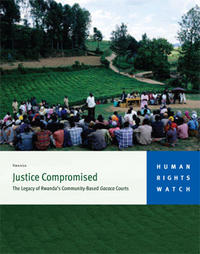
Summary of story from IRIN, June 2, 2011
A new report has reopened debate on whether the Rwandan government “betrayed” women who were raped during the 1994 genocide by letting community-based gacaca (which means “grass”) courts process their cases.
The Human Rights Watch (HRW) report marks one of the first attempts by an advocacy group to assess how the gacaca handled rape cases, which were transferred from conventional courts in 2008.
Because of the community-based nature of gacaca, HRW says the privacy of rape survivors was “seriously compromised” by the transfer.
The government, however, argues that appropriate safeguards were put in place to keep testimony confidential, and stresses that gacaca was the only means of administering justice in a timely fashion.
Some Rwandan civil society groups share this view.
Philip Clark, political scientist is the author of The Gacaca Courts, Post-Genocide Justice and Reconciliation in Rwanda: Justice without Lawyers (2010).
He said the resource constraints placed on conventional courts, which, before 2008 had failed to take action on genocide-related rape cases, made gacaca “the most obvious process to deal with those particular crimes”.
Still, he conceded that some problems had emerged.
Leslie Haskell, author of the HRW report, noted that of the more than 20 rape survivors interviewed for the report, only one expressed a preference for gacaca over conventional courts.
For others, who said they had been reluctant to come forward and file complaints but had done so because they believed conventional courts would protect their privacy, the transfer to gacaca “took them by surprise and left some feeling betrayed”.
Rape survivors feared their identities would be revealed to their communities despite the fact that testimony in rape cases was to be heard behind closed doors, Haskell said.
Because trials were held near administrative offices or schools in many cases, third parties would still be able to see a complainant enter a room with a judge and her alleged assailant.
“You’d still know it was a rape case, but if all went well you wouldn’t know what the details were,” Haskell said.
The report states that “a few” of the women – some of whom had not told their families about the rape and did not want the community to know – decided to drop their cases after they were transferred to gacaca.
However, the report also notes that provisions were put in place to make it easier for rape survivors to testify: they were able to challenge judges they believed were biased or would not respect their privacy; and they could write letters detailing their allegations rather than appearing in person.