


US Department of Veterans Affairs increases services for women
 Summary of story from Star-Telegram, June 20, 2011
America’s Department of Veterans Affairs (VA) has begun to introduce the new services for women veterans it announced earlier in the year (see WVoN story).
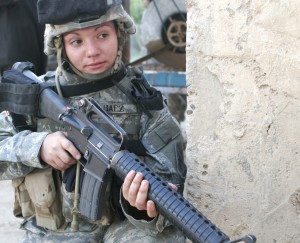
It was forced to reconsider the services it provides for returning members of the army by the growing number of female veterans, including many who have suffered debilitating injuries in combat.
At Dallas Hospital in Texas, the Fort Worth outpatient clinic now has a specialist women’s clinic, led by a female doctor, and is able to provide cervical exams, mammography and sexual trauma therapy.
‘Certainly there is demand,’ said Assistant VA Secretary L. Tammy Duckworth, who herself lost both legs and partial use of an arm while serving in Iraq.
‘For the first time in our nation’s history, we have combat veterans giving birth. We have found that women veterans of Iraq and Afghanistan use the VA at far higher rates than any other demographic group. … We’ve come a long way in the last two years. We have a lot more work to do, but we’ve made tremendous progress.’
Currently, 14 percent of military on active duty and 17 percent of the National Guard and reserves are women. Women may still be barred from frontline combat, but this does not mean they are out of the danger zones – 140 women have died in the Iraq and Afghanistan conflicts.
The VA is appealing to women to talk about the changes they would like to see in their healthcare provision and has employed a women’s health coordinator at every clinic nationwide to facilitate this.
The average male veteran is over 60, while the average female veteran is closer to 40. The younger ages of female veterans means that many are still growing their families, and need care in pregnancy and birth.
“We used to get three [pregnancies] a quarter, but I’ve had three this week,” said Kim Rice, a registered nurse who is the acting women’s program manager at the Fort Worth clinic.
A key service that has been earmarked for development to accommodate women’s needs is mental health.
One cause for concern was the finding by a VA report in January that women returning from Iraq and Afghanistan are more likely to be diagnosed with mental health conditions than men, but less likely than men to receive financial benefits for those problems.
There are also moves to alter the therapies available for women suffering from post-traumatic stress, including providing more individual counselling in addition to the group sessions it already conducts.
‘The key is listening and providing those services and understanding that it may be different,’ added Duckworth. ‘It’s about being flexible.’