


Governments need to reach out to rural women
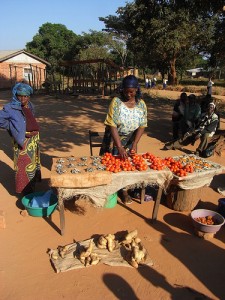 Summary of story from IPS, July 29, 2011
Governments, especially in Africa, need to have strong accountability measures in place in order to effectively reach women in rural areas through gender responsive budgeting.
This was one of the recommendations in the Global Call for Action plan drawn up at the end of an international high-level meeting on gender responsive budgeting held in Kigali from 26 to 28 July.
The meeting was held in conjunction with the United Nations Entity for Gender Equality and the Empowerment of Women (UN Women) and the European Union.
The document, which has yet to be published, also said that the livelihood of marginalised women in rural areas needed to be improved by increasing their access to land ownership and property rights.
However, a lack of coherent data about various aspects of gender emerged as one of the key obstacles to equality.
At the meeting, Rwanda was held up as a shining example of gender equality. Women outnumber men in parliament and make up the majority of employees in both the formal and informal sectors.
Rwanda is involved in a three-year pilot programme, Gender Equitable Local Development (GELD), dedicated to improving women’s access to resources and services at local level through gender responsive planning and budgeting.
GELD is organised by UN Women and the United Nations Capital Development Fund.
“Rwanda records female-dominated occupations at various levels of decision-making, but women also need to engage in other economic careers such as the construction and transport industries,” Suzanne Ruboneka, a women’s rights activist based in Kigali told IPS.
In order to get women more involved in industry and transport, for example, it was recommended that their access to micro finance loans be improved.
Local practitioners have said that a lack of confidence and insider knowledge often prevents women from making applications.
Economic analysts say the collection of statistical data on gender issues is still a major challenge for some countries.
“Once there is available data about gender, this would enable countries to determine what progress has been made towards achieving their targets (with gender responsive budgeting),” Bernard Kayinamura, an economic expert based in Kigali, told IPS.
Kayinamura said that, for example, the disaggregated data on secondary school pupils studying science subjects could not explain why the number of girls studying the subjects was not increasing.
“Thus there are sometimes missing figures which should be used (by decision-makers) in reviewing policies, procedures, practices and targets,” he told IPS.