


Women: the MDGs need you!
By Marie Birchall, click WVoN Co-editor
 I get the impression that there is much interest out there in the Millennium Development Goals at the moment.
Last week, in my day job as Campaign Coordinator of One World Action’s More Women More Power Campaign, I witnessed supporters clambering over each other (figuratively speaking, at least) to get tickets to an event we are co-hosting on the MDGs.
This week, I am informed by a reliable source that over 1.3 million MDG-related campaign actions have been taken by ordinary UK activists during the 10th anniversary of their establishment. And with the MDG Rescue Summit happening in New York at the end of next week, what better time than now to ponder how the world’s women are faring under this historic global agreement?
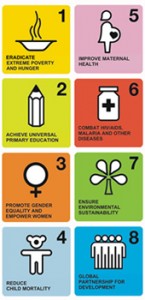
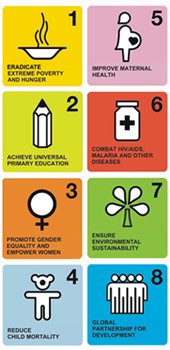
For those of you who are new to the topic, the good news is this: in 2000, world leaders came together to commit to a new global partnership to reduce extreme poverty and set a series of time-bound targets – with a deadline of 2015 – known as the Millennium Development Goals.
The bad news is, despite a lot of noise from our political masters over the past decade, many of the MDGs remain worryingly off-track. Even worse, as the major players in international development begin to direct investment more narrowly towards the quick-fixes – those people who fall just outside of the MDGs’ boundaries – there is a real risk that the world’s most marginalised people, especially women, will fall the furthest behind in this now-desperate race to achieve the Goals.
When it comes to gender equality, MDG 5 – which focuses on maternal health – has become the darling of those donors who want to project a public image of being ‘strong on women’. As the most off-track MDG, there can be little doubt that scaling up investment in this area will make a huge impact on the lives of the world’s women.
However, I believe that with this penchant for MDG 5, comes a real risk that the global priority for women will be narrowed down to a simple case of building more and better maternity wards in the most disadvantaged communities, rather than using this unprecedented opportunity to ensure women have better access to rights and services in all areas of their lives.
Aside from the dangers of pregnancy and childbirth, unequal economic rights have seen women make up 70 per cent of the world’s poorest people; power dynamics mean women and girls forgo food in times of hardship and suffer malnourishment; a lack of status means girls are far more likely than boys to die in childhood in many communities; and women and girls are at the bottom of the pecking order when it comes to buying medicines for HIV or for Malaria.
To cut a long story short, the empowerment of women is absolutely indivisible from EVERY MDG and the forthcoming MDG rescue plan must focus on a women’s rights agenda much broader than women’s sexual and reproductive health and more cross-cutting than the achievement of MDG 5.
We know, for example, that the MDG 1 commitment to halving the proportion of people who suffer from hunger is off-track in parts of sub-Saharan Africa. ”So”, I hear you say, in a tone reminiscent of those ‘Give a Man a Fish…’ adverts, “let’s provide investment in agricultural tools and land, so that people can grow their own food.”
But what if I told you that up to 80 per cent of the agricultural workforce in sub-Saharan Africa is made up of women? And that millions of people continue to go hungry every day because discrimination prevents these women from owning their land and other productive assets? Achieving an MDG, that at first glance seems to require a practical solution, actually requires an inherently political crusade that challenges centuries of injustice against women.
The message is simple. If we want to achieve the MDGs, we must take the world’s women along for the ride. The practicalities are more complex. And, as is so often the case, women’s equality seems to be stuck in reverse.
Delivering this memo to our political leaders in the UK might prove an uphill struggle. After all, the Ministerial ranks at the Department for International Development and the Foreign Office, as well at the members of the International Development Committee, are swelled exclusively with XY chromosomes.
For those of us passionate about the international gender equality agenda, we have a responsibility to ensure that the women’s rights message hits home with these men-in-high-places. Because, the simple truth of the matter is this: achieving the MDGs relies on the world’s women, just as much as those women rely on achieving the MDGs.