


Women’s leadership in unconventional places, far from the rich and the powerful
Ivana Davidovic
WVoN co-editor
There are women around the world who work tirelessly for the greater good. Some fight for justice, others for peace.
Some want improved healthcare in their communities, others help disadvantaged women to recognise their rights.
You will not see them on the pages of glossy magazines. They will probably never win any of the world’s most renowned awards or accolades.
Many of them operate in some of the world’s poorest countries and they risk their lives almost daily to help fellow human beings.
They are a part of a large army of powerful but unrecognised women and last week a few of them finally had their moment of appreciation.
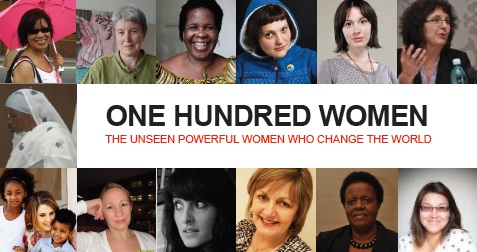
Established by the One World Action charity, the One Hundred Unseen Powerful Women awards, held at the King’s Fund in London on October 28, paid tribute to the many remarkable examples of women’s leadership.
They include:
Dr Hawa Abdi – a gynaecologist in Somalia who provides shelter, relief and medical care for women and children escaping the conflict.
Meenu Vadera – an entrepreneur in Delhi who founded and runs the city’s first women-only taxi service.
Maryam Bibi – a women’s rights campaigner in the ultra-conservative, tribal areas of Pakistan, who provides training and medical care to hundreds of women in the face of prejudice and threats of violence.
Mary Luz Avendaño – a campaigning journalist in Medellin, Colombia who risked her life by uncovering links between police officers and criminal gangs.
In the words of Hannah Davies, the director of One World Action, the award was established to: “celebrate the kind of things that are noticed only when they are not done.”
For Davies, the idea came from the Forbes Power Women list, which features the likes of Angela Merkel and Hillary Clinton. Speaking about it she said:
“It is great that Forbes, which is all about the rich and the powerful, does recognise that women’s leadership is on the rise. But you look at the list and it is all the glossies, often people who are married to powerful people too. They all have a high profile.
“But the women that One World Action collaborates with, who work with, for example, poor rural women in Zambia or Nicaragua, are also very powerful, they are making a difference, they make brave decisions, they show leadership.
“But they are very unseen. Nobody celebrates them. So we thought – let’s look for women’s leadership in unconventional places, far away from the rich and the powerful.”
In line with the desire to unearth as many hidden gems of humanity as possible, the process of nomination was democratic and open to everyone.
Thousands of individuals and NGOs used social networking platforms to nominate their candidates, which came from 40 countries, including Iran, Somalia, Afghanistan, Zimbabwe, Nepal, Peru and the UK.
Four winners and their runners-up were chosen by the panel consisting of the British High Court judge Laura Cox, journalist Rebecca Tinsley, ex-MP and women’s rights champion Barbara Follet, and the president of the Self Employed Women’s Association in Delhi Renana Jhabvala.
The modest reward was given to the winners to spend as they please, as a small sign of appreciation for all that they have done for others.
Unfortunately, the celebrations were tinged with sadness, as the One Hundred Unseen Powerful Women awards was the last act in the 23-year-old history of One World Action.
As one of their patrons, the Channel 4 News presenter Jon Snow, said at the ceremony, it was the first charity which “understood the necessity to empower the indigenous people to be their own aid-workers.”
“People were crying out for means to help themselves and that was the big discovery of One World Action. That is what distinguished it 20 years ago from any other aid organisation working from Britain.”
The charity, which championed women’s rights and trail-blazed the promotion of feminist development around the world, has been forced to close down due to the loss of funding from their main donor, the Department for International Development.
Their remaining projects, mainly in Africa, are being taken over by Womankind. Hannah Davies is hopeful that this newly-established award will go on under someone else’s stewardship.
With so many unseen women doing amazing work around the world, it would be a real shame not to recognise them.