


Going behind the headlines of violence in DRC
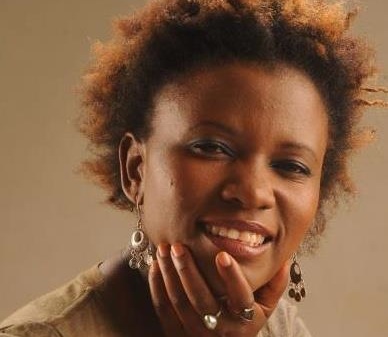 Julie Tomlin
WVoN co-editor
While stories about rape figures in the Democratic Republic of Congo (DRC) often make the news (see WVoN story), Rosebell Kagumire is determined to tell the stories of the individual women affected.
Her work as a journalist and for the Isis-Women’s International Cross Cultural Exchange (Isis-WICCE) Communications Department documenting stories of women in conflict and post conflict settings in Africa has given Kagumire a unique perspective on women’s lives.
Through her work with Isis-WICCE, which is based in her home city of Kampala in Uganda, Kagumire says she has been able to gain women’s trust and hear stories that are difficult for them to tell.
And as a journalist she is also able to make sure their stories are heard.
Recently Kagumire wrote about Ester Abaja, a woman who was captured by the Lords Resistance Army (LRA), forced by soldiers to kill her one-year old daughter and gang raped.
Now raising a son who is the result of her time as a ‘Bush wife’, Abaja has had to have medical treatment for a prolapsed uterus, a condition common among women who have experienced sexual violence.
Abaja spoke about the emotional and psychological impact of her experience, including the stigma she has endured and her rejection by her husband who left her to raise their four surviving children and her child from the war alone.
Her story created a great deal of interest online.
“These are stories that take time,” says Kagumire, who is an Internet Freedom Fellow with a US Department of State programme promoting the work of online activists and journalists to enhance human rights coverage.
“When I go with the NGO, I go differently to if I go as a journalist.
“I don’t have to worry about deadlines, I am working but I know I can take two weeks working on one story, and because I am with the NGOs and women’s groups they find it easier to tell me, they tell you because they think you are going to help.
“With a journalist they also think you might help but you’re not going directly to help, it’s very different if you are writing for the media.”
Much of the media coverage of atrocities that took place in DRC fails to look at the impact of the violence on people’s lives, and few journalists follow up the stories, says Kagumire, who also works on a VOICE Blogging fellowship run by Oxfam, Channel16 and Crisis Action to help South Sudanese journalists amplify their voices through blogging.
“In Uganda the newspapers don’t invest in country reporters and they tend to focus on political stories, and people often look at stories like this either as a bad story, or they are waiting for the government to do something, and it of course won’t do anything quickly.”
The story of another woman, Grace, who was raped and rejected by her family after she contracted HIV, reflects another aspect of women’s lives that is rarely reported by the media, says Kagumire: the fact that she is more than a victim of violence.
Grace went on to play an active role with people with HIV, became very active in politics of her area and recently addressed the African Union.
“It was really moving, seeing a woman who could have given up, standing up there speaking,” says Kagumire.
“We focus so much on the negative, but Grace went on to become a local leader, which she could not have done without the support of an NGO that helped her and gave her the necessary support to rehabilitate her.
“She is not just a victim but someone who has gone beyond being survivor to regain her dignity.”