


Ireland to debate quotas for women at next election
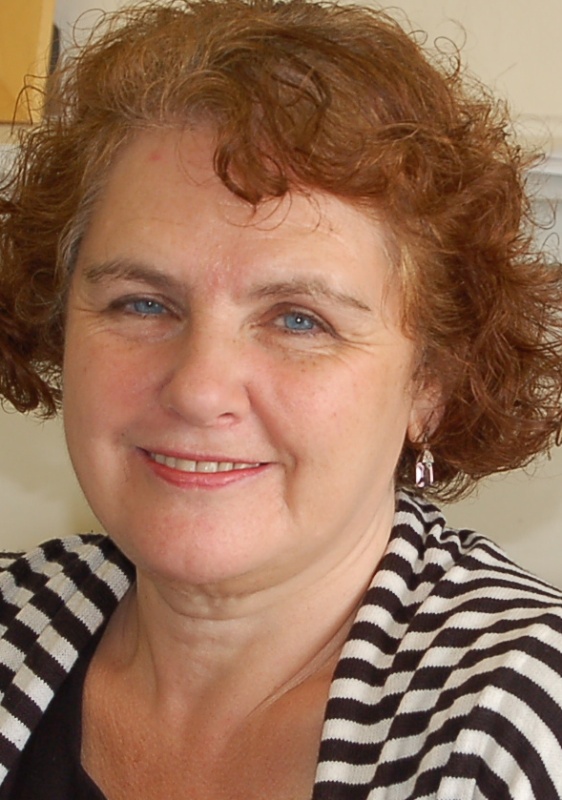
Nan Sloan
Nan Sloane
Director, Centre for Women and Democracy
Imagine the scene.
Lined up on the platform in front of over 300 women and rather fewer men are the general secretaries of all the major political parties. In an overflow room another 60 people watch on a video link.
One by one, each general secretary pledges his or her party to implement quotas for women at the next general election. They are followed by the leaders of their parties, who do the same.
This is not the daydream of a deluded feminist, but a real event.
It didn’t happen in the UK, which is probably why the UK media didn’t bother to report it, but it did happen just across the water in Dublin, where, next month, the Dáil will start to debate the Electoral (Amendment) (Political Funding) Bill 2011.
It sounds tedious stuff, but it includes a little stick of dynamite in the form of a clause which, if passed, will mean that political parties will face a cut of half their State political funding if they do not have at least 30 per cent women and 30 per cent men candidates at the next general election.
This is then scheduled to rise to 40 per cent after 7 years.
And it stands every chance of being passed, and maybe of being made even tougher.
The ‘How to elect more women?’ conference in Dublin Castle on January 20 was called to discuss the proposals, and it was so over-subscribed that, even with the over-flow facility, there was still a waiting list of people who couldn’t get in at all.
It was chaired by the redoubtable Irish journalist Olivia O’Leary and addressed by speakers from both Ireland and overseas, including the most senior representatives of the political parties.
It was opened by the Taoiseach (prime minister), Enda Kenny, and Mme Nicole Ameline, the deputy chair of the UN’s Committee on the Elimination of Discrimination Against Women (CEDAW).
Only 15 per cent of members of the Dáil are women (as against 22 per cent in the UK Parliament), and the last election in 2011 failed entirely to deliver any progress.
Instead of bewailing this and then shrugging it off on the grounds that, given the dire economic situation, nothing could be done about it, the Irish government (Fine Gael and their coalition partner the Labour Party) decided that something could and would be done. Having decided this, they are doing it.
Of course their scheme is not perfect – no quota system is. But it is a step in the right direction.
In the UK, the Speaker’s Conference reported on how to make parliament more diverse and representative in January 2010, but since then there has been very little movement.
True, we had a debate in the House of Commons a couple of weeks ago, but that just resulted in the passing of a resolution calling ‘on the Government and political parties to fulfil commitments made in response to the Speaker’s Conference’.
Some high-profile women’s and democracy organisations in the UK were so alarmed and irritated by the situation, and especially by the invisibility of women politicians at the 2010 general election, that they got together and launched the Counting Women In campaign last autumn.
Inspired by the successes of our Irish sisters, we will go on raising the issue until we get some action, even though it is clear that there is no real appetite in government for taking any.
When it comes to having a representative democracy, our collective squeamishness over political and constitutional change is leaving us stranded in the wake of other countries.
At the moment, the only western European countries with a lower percentage of women MPs than the UK are Ireland (15 per cent), France (19 per cent) and Italy (21 per cent).
France has a general election this year, and Italy in 2013. Unless we make huge strides in 2015, Ireland will almost certainly overtake us in 2016.
Which leaves us with the real possibility that, unless we take a leaf out of Ireland’s book, we will soon be propping up the European democratic league table.
A conference of our own to discuss how we avoid this might not be a bad idea – if only all the parties would sign up to it and the government would act.