


What if the world really was run by women?
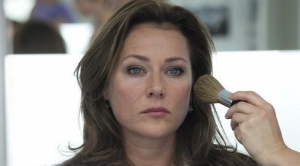
Denise Turner
WVoN co-editor
Borgen, the Danish political drama has proved a hit in Europe especially in the UK, where fans are purported to include UK Prime Minister, David Cameron and wife Samantha.
Indeed at Nordic-Baltic Summit in Stockholm last week, when calling for the acceleration of women appointments to UK corporate boards*, Cameron admitted that he fully expected pundits to link his agenda with Borgen, in which the female PM forces Danish companies to make half their board female.
Borgen takes its name from the nickname for Christiansborg Palace, which houses Denmark’s three branches of government: the Parliament, the Prime Minister’s Office and the Supreme Court.
There is no question that the reasons for the show’s popularity are the inherent twists and scheming common to all political systems. But for me, what makes it gripping, are the two strong female leads.
The first is Birgitte Nyborg, who becomes Denmark’s first female prime minister. The second is Katrine Fønsmark, a talented journalist and host of a popular TV news show.
The two women come up against the usual problems of everyday female life, not exactly life-changing stuff one might think. But what makes this show authentic is that it pulls no punches.
The women face back-stabbing ‘colleagues,’ casual sexism, their own impossible expectations of themselves, not to mention those of partners, family, colleagues and society in general. The one unlikely flaw is that neither character has any female friends.
Fønsmark’s character, played by Birgitte Hjort Sørensen, manages to have affairs with two government spin doctors (the latter married and by whom she gets pregnant); before moving onto a gorgeous-but-dim gym instructor whom she ditches when he shows no interest in politics.
Being young and good-looking herself, she comes up against sexism at work in the form of an older female colleague sacked for alcoholic abuse who wrongly believes that Fønsmark shopped her to further her own career, a government minister and unwanted attention from her ex. She manages to shrug all off with aplomb.
But the Nyborg character played by Sidse Babett Knudsen, has three much more complex and interesting strands.
Firstly the corrupting influence of power. She starts out as an amiable, happily married mother of two, with greenish, left of centre politics who practices a collegiate, give and take way of working. The kind of management style that has been cited by some leading thinkers as being useful in banking to offset the kind of risk-taking, macho behaviour that exacerbated the recent financial meltdown.
At first she sticks to this approach, but as series 1 progresses, we see how she ditches her principles, alienates her husband, risks her kids’ health and sacks political allies to hang onto her position.
That brings me to point two. The ‘superwoman fantasy’. Why does this woman not take advantage of the (you would have thought) support that comes with the job? I mean housekeeper, nanny, chief bottle washer? Oh and there’s a reason why so many leaders are men, they’re called wives…
This brings me neatly to the third strand, husband Phillip. The two have a pact that the career of one of them will take precedence over the other’s for five year intervals. Though initially pleased for Nyborg when she becomes PM, he later starts to feel emasculated and says that ‘he misses his wife.’
This, despite the fact that he is a respected business man and lecturer, not exactly a house-husband. So without discussion, he accepts a CEO role that he consequently must resign from because of a conflict with his wife’s position, and then embarks on an affair that ends the marriage.
If you think about it, these points could have interesting ramifications for society at large if there were actually 50 per cent women leaders in all walks of life.
* In 2010 women made up 12.5% of corporate boards of FTSE 100 UK companies. The UK government has asked firms to voluntarily double the number of female executives by 2015.