


Simple training halves baby deaths
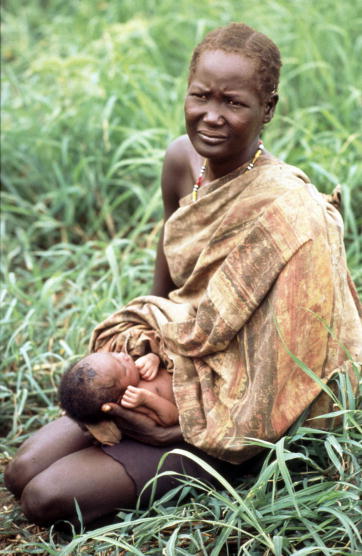
In some parts of Africa, almost 1 newborn baby out of every 10 dies
From Boston University School of Public Health (via Eurekalert 4th February 2010)
By Lindsay Keith
WVoN Co-editor
The British Medical Journal has reported that Boston University researchers reduced neonatal deaths by 50% by introducing simple training measures for traditional childbirth assistants in Zambia.
Over 10 million children die before the age of five every year, and 4 million of these deaths occur in the first month of life, with childbirth and the first seven days being critical times.
Scientists from Boston have now proved, in a controlled trial, that simple interventions and resucitation techniques, could be taught to tradional birth attendants, cutting the neonatal death rate in two.
“We essentially showed that there is a method, very simple and inexpensive, to reduce neonatal mortality by about half,” said lead author, Dr Christopher Gill, adding, “This is the first high-quality study, using a randomized control methodology, to show unambiguously that a neonatal resuscitation protocol can be used to save lives. It’s hugely encouraging.”
The average mortality rate for newborns in Zambia is 34 in 1000, which is around ten times greater than the risk in developed countries such as the UK.
The study was carried out in a rural part of Zambia where access to healthcare is extremely limited. Traditional birth attendants were split into two groups, one group received basic training; this was aimed at preventing hypothermia and asphyxia by warming and rubbing the babies and ensuring that airways were clear.
At least 1 in 10 otherwise healthy infants can experience inadequate respiration immediately after birth. If the airways are not cleared quickly, brain damage and death can occur, but measures to clear the airways and stimulate respiration are fairly simple, and include clearing mucus away and vigorous rubbing.
“In the context of a highly dispersed, rural African community with very limited access to health care, traditional birth attendants [TBAs] were able to master a set of skills that allowed them to significantly reduce neonatal mortality,” the study concludes. “This was accomplished in a population of women TBAs with very low rates of formal education and under austere conditions . . . We believe this approach has high potential to be applied in other resource-constrained settings.”
Save the Children has stepped in to support the continuing training of TBAs
At 34 deaths per 1000 live births, Zambia is not the highest neonatal death rate. In parts of Ethiopia 92 babies out of every 1000 are stillborn or die within the first week of life and 1 in 4 women die in pregnancy and childbirth.
Reducing global neonatal deaths by two thirds between 1990 and 2015 was the 4th Goal from the Millennium Declaration by the United Nations in 2000.
The Goals represent “human needs and basic rights that every individual around the world should be able to enjoy—freedom from extreme poverty and hunger; quality education, productive and decent employment, good health and shelter; the right of women to give birth without risking their lives; and a world where environmental sustainability is a priority, and women and men live in equality”.
Currently mortality rates are falling, but not nearly quickly enough for the 4th Millennium Development Goal to be reached. A concentrated effort to provide this kind of neonatal resuscitation training for TBAs across more of sub-Saharan Africa could however prove the difference between success and failure.