


World Cancer Day: story of a breast cancer survivor
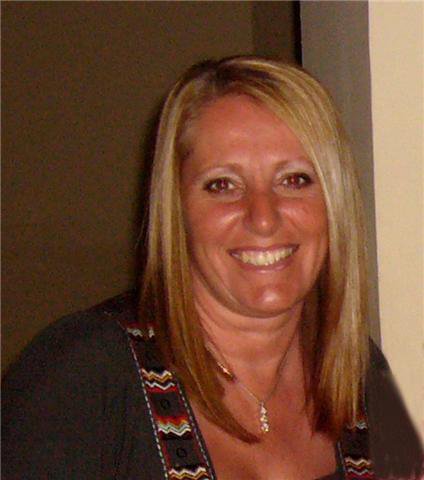
Kim Fergusson
By Imran Ali
WVoN co-editor
“Initially, it felt like the worst thing that had ever happened to me, but probably after 10 minutes of crying I thought ‘this is it there’s no point in crying it’s not going to help anything just deal with it’.”
Words of a young Scottish mum, Kim Fergusson, diagnosed with breast cancer at the age of 30.
“That was time to just pick myself up,” she added, “I had two children, I was on my own, I had them to live for. That was how I got through it.”
Cancer is a leading cause of death worldwide. The World Health Organization estimates that 84 million people will die of cancer between 2005 and 2015 without intervention.
Each year on 4 February, the UN health agency supports the Union for International Cancer Control, the largest cancer fighting organisation of its kind.
And while every country has its own epidemic, breast cancer is the most common cancer in the UK with over 46,000 diagnoses each year.
Cancer Research UK figures out today show that a woman’s risk of developing breast cancer has risen to one in eight from one in nine (see WVoN story).
Breast cancer rates have increased by 3.5 percent in the past decade, with almost a fifth (19 percent) of cases in women aged between 25 and 49, according to the charity.
Fergusson, 40, from the suburban town of East Kilbride in South Lanarkshire, was diagnosed with invasive cancer which can spread outside the breast.
With no obvious symptoms, she “just literally found a lump by chance in the shower.” And while the majority of lumps are not cancerous, the single mother-of-two was convinced that something was wrong and decided to see her doctor about it.
“The doctor examined me and told me that because I was only 30 it was just hormonal,” she said. “I wasn’t happy to accept that. I’m glad I didn’t just take the doctor’s word quickly.”
“A lot of women brush it under the carpet, but I was clever enough to realise that if it was cancer it wasn’t going to go away. So the quicker I deal with it the quicker it’ll go away.”
After further testing, it was confirmed that she had cancer in her right breast which had reached stage three, where the tumour can measure up to five centimetres and the lymph nodes in the armpit are also affected.
Furthermore, the abnormal cells were grade three, making them more likely to grow and spread quicker.
Fergusson said she didn’t, to her regret, share her feelings with her family in the beginning.
“I kept a lot of it inside because I didn’t want to upset them or make them worry about me,” she said.
“Looking back now, I don’t think I understood the full extent of it because when I hear how other people they deal with it, it devastated them but it didn’t devastate me.”
“I don’t know, maybe I didn’t realise the full extent of what it actually meant I was going through. I was optimistic all the way through, I didn’t let it get me down. I just did what I had to do I fought the battle I had to fight.”
Fergusson received radiotherapy at the Golden Jubilee National Hospital in Glasgow, the largest health board in the UK, where breast cancer accounts for almost one in three of all cancer cases in women.
She also underwent mastectomy and eight sessions of chemotherapy at Hairmyres Hospital in East Kilbride. Hair loss is a potential side effect of chemotherapy.
Fergusson said losing her hair was “an outward sign that she was ill,” adding that it was when she started to sense people’s pity.
She said: “People on the street would nudge each other ‘oh look she’s bald’. I didn’t feel pity for myself. I didn’t want people to feel ‘oh that’s a shame’.”
She didn’t want to be treated differently just because she had a disease.
“I was still me. I still wanted to continue on and for people to treat me the same way as they always treated me, I wasn’t any different,” she said.
“Losing my hair was the lowest point and it wasn’t from a vanity point of view because I didn’t care one way or the other, but it was then an outward sign of my illness.”
Although the causes of breast cancer are not fully understood, there are some ‘risk factors’ which can increase a person’s likelihood of developing malignant tumours.
A family history of breast or ovarian cancer, being overweight or drinking too much alcohol can all put women at risk. However, Fergusson, who had been on ‘the pill’ from the age of 16, was told that her cancer was linked to oestrogen.
According to the NHS, women who take hormonal contraception, like the pill, are at a higher risk of developing breast cancer compared with women who don’t use them.
It can take up to 10 years for the risk of breast cancer to go back to normal after stopping the pill, which can also cause breast tenderness and breast enlargement in some women.
Fergusson, who volunteers at Breast Cancer Care, a UK charity, said she didn’t keep her 12-year-old girl and nine-year-old boy in the dark during her 26-week gruelling treatment.
“I never lied to them at all because I didn’t want, God forbid, if anything happened to me them to say ‘why didn’t mum tell us the truth’,” she said, “so I told them the truth the whole way though.”
“They were very aware when I had my chemotherapy I was having bad medicine to help the bad bits and they took it all in their stride,” she added. “They still brought their friends to the house, which I found the most bizarre thing.”
“I was embarrassed for them thinking they would think ‘oh I can’t bring my friends because they’ll ask why your mum is bald’. But they didn’t. They continued as normal. It was really weird.”
Ironically, she says that breast cancer was “the best thing” that ever happened to her, Fergusson, who’s happily married now, insists it made her a stronger person and changed her perspective on life.
“I have a whole new outlook in life. I don’t let things get on top of me. I find things trivial that other people would probably buckle under the strain.”
“I enjoy every day. I’m here 10 years down the line, I’m still alive and I value my life a lot more.”
Awesome article, and fantastic and inspiring interview.