


Interview with Ashira Ramadan, Palestinian journalist
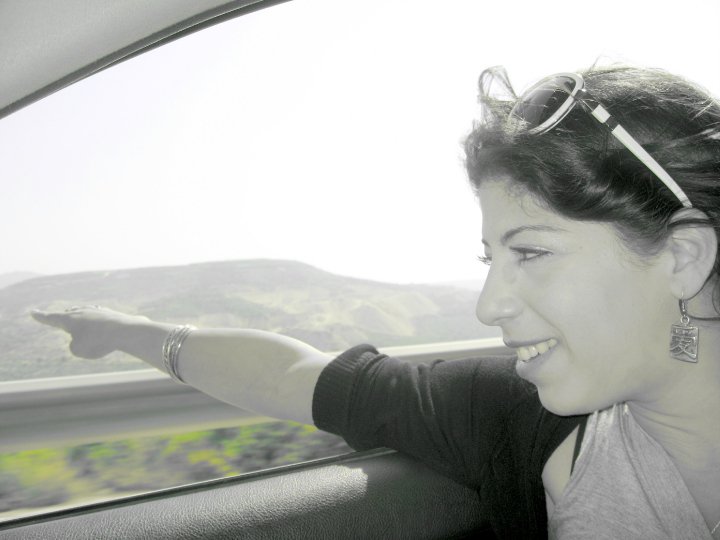 Simon Stiel
the vibe*
The attack on American journalist Lara Logan in Egypt has led to discussion about women reporters covering conflicts in the Middle East. Another pressing issue is how women in the Middle East can be empowered as journalists.
The Sleepless in Gaza and Jerusalem television series aims to show Palestinian women as active reporters covering the reality of Palestinian daily life.
One of the reporters is Ashira Ramadan who is currently working as a communications and reporting specialist at the Internews Network.
When UAE based Radiant Circle Productions and Ramallah based PINA Productions approved a TV series, she was approached. “I wasn’t given a lot of information about the show,” she said.
“I did a pilot and I was selected. In the beginning it was only me, Nagham from Gaza and Ala in Jerusalem.” Four women in the West Bank and three in Gaza eventually reported for the show.
Ashira explained about the deadlines they had: “It was dependent on what the girl had to do that day. For example, on some days the camera followed me while I was filming for my other TV show This is Jerusalem for Palestine TV so what I needed to film for that show.
“The camera of Sleepless would follow. If there were major events happening in any area, I would also go to them. I had very tight deadlines because I had to film, go back to the office and edit the material so it can be uploaded on YouTube on the same day and also prepare my schedule for the next day.
“A lot of times things also just happened by coincidence. We’d go to one place to film something but we find something more exciting on the way and we film it instead.
“The camera also followed me on normal days with my family with my friends and on other occasions.”
Director Ramzi Khoury explained on the Transit Show that he chose only women because “a girl by nature is interested in detail.”
Ashira agrees with that view: “I think that in Palestine women play a big role in the society and politics because we claimed our status during all the wars and uprisings.
“I think that women in Palestine are respected and in the Sleepless show, it was important to use all girls because we wanted to highlight to role of women and because women deal with situations differently.
“In journalism they have more attention to detail and they have a mix of critical and emotional analysis to events around them. And since the series is aimed at an international audience, I think they are more interested in seeing the role women in Palestine play.”
Palestine is advanced compared to its neighbours in the Middle East regarding women being prominent in media. In 1965, the General Union of Palestinian Women was founded which printed publications about women’s issues.
During the first intifada in 1987, women acted as guides and camera crew for international reporters covering the uprising. When the Palestinian Authority was established in 1993, three women appeared in the first Palestinian news broadcast.
Ashira says: “Due to the conflict we have women prisoners, activists, martyrs and politicians. This opened the way for a lot of developments in women rights and it’s the same for media.
“Palestinian women have been active in the media as journalists, reporters and camera women for several years. I think we have relatively fair competition with men in the media field. Of course, there is more room for women rights and development of the role of women in the media but I think we are well on our way to achieve these goals.”
The key achievement of the Sleepless series is that 105 films were shot in 90 days. During the filming, the West Bank and Gaza women were not able to meet each other: telephone and facebook were necessary.
Viewers can watch rap concerts; a press conference held by the Palestinian opposition parties; a consumer rights day; an archaeological dig in Gaza and Ashira’s cousin Rasheed Nashashibi competing in a rally.
Of course, more familiar scenes to an international audience are shown: Israeli soldiers armed with rubber bullets and tear gas confronting demonstrators.
Ashira describes her feelings about the Israeli occupation: “Every time I enter a house to film and I listen to stories or see Palestinians being shot, mistreated and humiliated, I am angered, shocked and surprised.
“Being a journalist you get exposed to thing like this a lot and being a Palestinian you are exposed to it on a daily basis but nothing makes it easier. You can never get used to it!”
Ashira herself has been in Israeli detention. Settler children in Hebron follow her brandishing sticks and shouting abuse in Hebrew.
In the last episode, Israeli demonstrators celebrating the raid on the flotilla surround and envelope her with Israeli flags. Maintaining composure in these circumstances is challenging.
“It’s very difficult a lot of the time. I just wanted to scream and fight back but I knew that if I got angry or treated those people attacking me in the same way, the Israeli police would arrest me. We live in a place where everything is against us.
“The whole system in Israel is racist and discriminates so if Israelis attack me or insult and humiliate me there is nothing that I can do other than show this to the world. My only defence is the camera lens and a lot of times that doesn’t really protect me.”
What the camera lens records is being put on youtube, twitter and other social networking sites. The girls interact with the viewers by answering their questions. The Sleepless team hope 6 TV networks in the United States will broadcast the show in 30 minute segments.
They hope to show it in Europe too.
Al Jazeera and correspondents from international newspapers do field reporting in the Palestinian territories. What they write has an impact.
However, Ashira is critical of the western broadcast media: “I do feel that western media only covers major events such as wars on Gaza and they do it in a very superficial way.
“I think western media does not show the reality of occupation. Major attacks happen against the Palestinians but the more draining thing is how people live every single day of their lives under occupation not free to travel, work, build, and even fall in love and get married in some areas.”
There are hopes that a second Sleepless series will be commissioned. For years, Palestinians have been filmed by outsiders.
The Sleepless series shows Palestinian women documenting the lives of their people. They are also examples for other women in the Middle East to follow.
*WVoN has published this feature as part of a collaboration with the vibe to celebrate International Women’s Day.
Fantastic article and so very many important points here.
“However, Ashira is critical of the western broadcast media: “I do feel that western media only covers major events such as wars on Gaza and they do it in a very superficial way.
“I think western media does not show the reality of occupation. Major attacks happen against the Palestinians but the more draining thing is how people live every single day of their lives under occupation not free to travel, work, build, and even fall in love and get married in some areas.””
So true, and this is where I think time and time again, WVoN really comes into its own. Our recent reports on Palestine – particularly on the arrests of children in Nabi Saleh – shine a light on the daily, horrific reality for communities in the West Bank. This is equally true not only for those in Gaza, but for the many Palestinians living in Israel, including those in villages and towns that the Israeli state refuse to recognise.
Thanks so much WVoN and to the vibe and Simon Stiel for highlighting this crucial issue for IWD. Brilliant!