


Glasgow mum talks about having killer disease on World TB Day
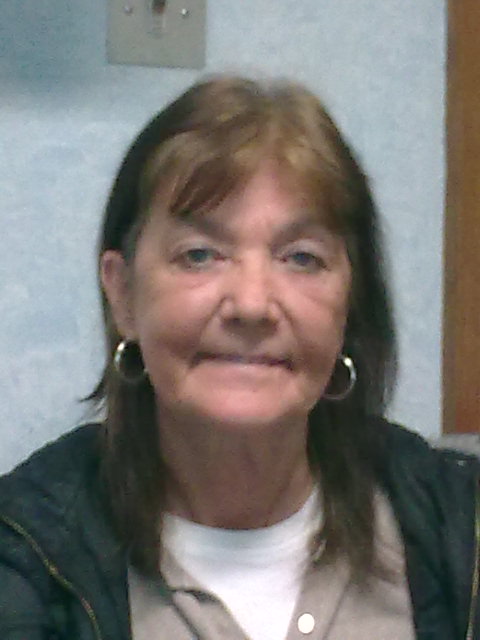
Jeanette Durnan
By Imran Ali
WVoN co-editor
Although TB may be considered to be a lung disease from years ago, the statistics tell a different story.
One-third of the world’s population is currently infected with the bacterial infection, which kills approximately two million people each year.
Put another way, the entire population of a country like Slovenia die every year by the contagious disease.
Scottish mum-of-four Jeanette Durnan, from Glasgow, was diagnosed with pulmonary TB in 2010.
Durnan, 58, already had several underlying health problems such as emphysema, chronic obstructive pulmonary disease, central nervous system depression, arthritis, and irritable bowel syndrome.
She said: “I kept getting these terrible pains in my lungs, but I do get pains in my lungs because of the emphysema.
“So at first I thought it was that but then I was getting weak, tiring very easy and sweats were pouring out of me so I went to my doctor and I told her I didn’t feel as if there was something right in my body. You know your own body and I just didn’t feel right.
“She said it’s just a chest infection so that’s what I was getting treated for a month. But I went back to the doctor and said there’s something not right.
“I was referred to Glasgow Royal Infirmary where I had x-rays done. I was prepared for the word ‘cancer’. I had it in my own mind, accepted, if he tells me that I can cope with that.
“When he sent me for x-rays and I came back he said ‘I’ve not got very good news for you Jeanette’. I was smiling at him because I had the feeling that’s what he’s going to tell me. He said ‘you’ve got TB’ and I went ‘I beg your pardon?’
“I was still smiling because it didn’t actually sink straight right in and it wasn’t until I got outside and sat on the bench and I went ‘TB TB TB’. To me my own world just fell apart when I got told that.”
TB is spread by inhaling tiny droplets of saliva from the coughs or sneezes of an infected person. Left untreated, it can spread and be fatal as it can damage the lungs to such an extent that a person becomes unable to breathe properly.
An annual event on March 24, organised by the Stop TB Partnership, raises awareness about the global epidemic of the condition and efforts to eliminate it.
But figures released by Health Protection Agency, in 2010, show that cases of TB in the UK have increased by 5.5 per cent, from 8,679 reported in 2008 to 9,153 in 2009.
Nearly three-quarters of cases occur in people born outside the UK.
Communications manager Helen Clegg, of the TB Alert charity, said: “It is important to remember that TB can affect anyone, though some groups are at particular risk.
“In the UK this includes ethnic minority communities, both UK and non-UK born, which may reflect their links to countries where TB is more common.
“The homeless population, substance misusers, prisoners, and people with weakened immune systems – for example through health conditions such as HIV – are also at increased risk from TB.
“TB is an airborne illness. The biggest risk factor is knowing someone with infectious TB – that is TB in the throat and lungs – as you need to be in close contact with someone with infectious TB for many hours to be at risk of contracting the illness.
“Someone with infectious TB typically passes it on to 10-15 people in a year if it is left untreated.
“Early diagnosis and treatment is key to reducing the transmission of TB to other people. The easiest way to achieve this is to raise awareness about the symptoms (a cough for three weeks, tiredness, night sweats, fever, weight loss and loss of appetite) and what action to take if you suspect TB – that you should go to a doctor.”
The World Health Organization is working to cut TB prevalence rates and deaths by half by 2015.
In Scotland, however, annual totals have risen steadily over the past five years, with women more likely to have recurring infections.
Dr Claire Cameron, strategic leader for TB at Health Protection Scotland, said: “There has been a continued increase in the number of TB cases reported in Scotland since 2005. However, levels still remain lower than the UK as a whole and many other European countries.
“The ongoing transmission of TB in Scotland shows the importance of case identification, treatment and contact tracing. The good news is that TB is still a treatable condition and need not be feared by the general public, however anyone concerned about their symptoms should consult their GP.”
After her diagnose, Durnan went to stay with her sister Joan in Balornock, north-east Glasgow, adding “it was a terrible time.”
She was referred to a treatment team and was assigned a nurse who coordinated her care.
The infection was treated using a course of a combination of tablets. The medication caused a lot of unwanted side effects like nausea and vomiting, fever and numbness in her hands and feet.
“I wish I had cancer, honestly, I could’ve coped really better,” said Durnan.
“My hands and feet started to swell up, I had bad cramps, I couldn’t drink tea, I couldn’t eat food, and I was living on just water. I got to a stage where I couldn’t toilet myself; my sister had to clean up after me.”
“At one point I actually felt suicidal,” she added, “I felt like a big baby with my sister running after me, looking after me.
“I said to myself ‘I think I’ll just finish if off’, and then I thought about my kids and my grandkids and I said ‘no no no it isn’t an option, just carry on’.
“From that moment, I swung my legs out that bed and I made myself walk about.”
But there’s much more to Durnan’s life than just fighting TB.
Abandoned as a child, she was brought up by her auntie and uncle in Auchinairn, East Dunbartonshire. Her mother had postnatal depression, which affects one in 10 new mums in the UK, and couldn’t cope after losing her first-born girl a year earlier.
Durnan’s auntie and uncle took her to Australia when she was ten and lived there for two years. When they returned to Scotland, they moved to the suburb town of Bishopbriggs in East Dunbartonshire.
When Durnan reached her teens, she ran away from school to be with her birth family in Pollok, south-west Glasgow.
She was sexually abused by her foster-parent, who also abused his own daughter from a very young age, over a nine-year period.
“It was OK at my Auntie Ella’s house but it wasn’t actually a happy time for me and my cousin Jacqueline.
“Since I was four years old, he was abusing me and then he was doing that to Jacqueline.
“But what I used to do when I heard him coming to the room, I used to throw Jacqueline out the bed and under the bed.
“But when I became 13 I just couldn’t take anymore at all, I ran away from school and found my parents.”
Durnan eventually told her dad, who had a “bad temper,” what had happened and he “went up and beat him up” and went to prison for it.
Durnan’s mum had eight other children and couldn’t manage being a single parent so she sent her young daughter off to stay with another auntie in Priesthill, on the south side of Glasgow.
When Durnan’s father returned from prison, he brought her back home. By this point, however, she didn’t have many qualifications and had to work to support her big family.
At work, she met her future husband and got married at the age of 17. Three months later, Durnan’s mum passed away and her dad, who was diabetic and had the genetic disorder haemochromatosis (iron overload), had a nervous breakdown.
Durnan took over and looked after her six sisters, two brothers and nursed her ill dad.
Durnan believes that her childhood experiences “wrecked” her adult relationships later in life and contributed to her ill health.
She was married for 28 years but couldn’t have a “normal” relationship with her husband who was “too busy out with other women.”
When they got divorced, she met another man and, after two years moved in with him and lived with him for eight years.
“The first couple of years he was excellent,” she said, “and then he started being violent. Then I started running away from him and he kept finding me.”
Teetotal Durnan turned to alcohol in her mid 40s, adding “I started to drink because then I couldn’t feel the pain when I was getting beat up.”
“I was a binge drinker. If I felt stressed out I thought that that would get rid of my problems, but it just makes it worse.”
She escaped to Spain, which has one of the highest cases of TB in Europe, and stayed there for six months. She made a made a living by working in kitchens as a chef.
Since her return to Scotland, she’s been recovering from TB while in hiding from her violent partner.
After all that she’s been through, Durnan carries on with a smile on her face, takes pleasure in little things and looks on the bright side of life.
“The way I look at life is if you waken up in the morning and you’re alive and able to walk from your bedroom to your toilet, is another day.”