


Women Nobel Prize winners and pioneers in 100 years of scientific breakthrough: free book to download
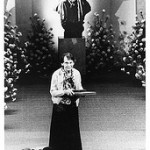 Summary of story from the Guardian 9.3.11
March 8 saw the digital launch of Suffrage Science, [click here for free download] a book about the – significant – contributions that women have made to science over the past 100 years.
It celebrates pioneer women scientists, some of whom were Nobel Prize winners.
And it touches on some of the issues women face in science today. For a man still six times more likely to work in a science, engineering, or technology profession than a woman, despite the fact that women make up just under half of the UK workforce.
Featuring conversations between leading female researchers in neuroscience and psychology, embryology and genetics, structural biology; and the biology of cancer and HIV, Suffrage Science is available for PDF download.
Dorothy Hodgkin, for example, worked out the structure of penicillin, insulin and vitamin B12.
After 31 years of work, she won the Nobel Prize for Science – in 1964.
The Daily Mail ran the story under the headline “Oxford housewife wins Nobel”.
In 1982 Virologist Françoise Barré-Sinoussi identified HIV as the cause of AIDS, for which she was awarded a Nobel Prize.
In the 1940s and 50s cytogenetecist Barbara McClintock demonstrated transposition as a mechanism of turning genes on or off, for which she was awarded the Nobel Prize.
Molecular Biologist Carol Greider was awarded the Nobel Prize in 2009 with Jack W Szostak.
In 1981 developmental biologist Gail Martin isolated embryonic stem cells, a term she coined, concurrently with Martin Evans and Matthew Kaufman who reached the same conclusion at Cambridge University at the same time.
Developmental psychologist, Uta Frith focused on autism spectrum disorders, pioneering the hypothesis that incomplete Theory of Mind leads to poorly developed empathy. Her book Autism: Explaining the Enigma, 1989, is used as a handbook worldwide.
Cell biologist Amanda Fisher is director of the Medical Research Council’s Clinical Sciences Centre at Imperial College London.
To celebrate the achievements of women in science and to discuss their continuing under-representation there was a discussion led by people described as ‘some of Britain’s brightest thinkers’:
Professor Uta Frith (Emeritus Professor of Cognitive Development, UCL), Professor Carol V Robinson (Royal Society Professor, Department of Chemistry,University of Oxford), Professor Mary Collins (Dean of Life Sciences, UCL), Professor Dame Sally C Davies (Chief Scientific Officer, Department of Health) and Liliane Lijn (NASA artist in residence).
Vivienne Parry, science writer and BBC Radio 4 broadcaster, chaired the event.