


Banning the veil- the debate continues
 Summary of story from The Telegraph April 16, 2011
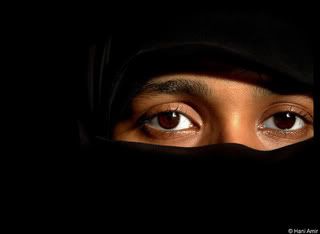
Following the introduction of the controversial burka ban in France last week (see WVoN story), journalist Andrew Gilligan asks a group of Muslim women in Tower Hamlets, east London, for their views.
That seems like not a bad idea as the group most neglected, particularly within the decision process, are the women affected by the ban.
The French parliamentary inquiry recommended the ban lasted six months and heard 211 witnesses. Yet embarrassingly just one of them was a niqab-wearing woman – and that was just because she insisted on being heard.
The commission’s report runs to 658 pages. A total of one paragraph is devoted to this woman’s testimony.
In questioning a group of women in London’s main Muslim area, Gilligan finds out why these women have chosen to wear the niqab, first-hand:
“I used to go clubbing, I used to drink, I used to wear skinny jeans,” said Ms Jama, who is 28 and from Barking.
“But I just got thinking it wasn’t right. I had lots of men and I never got anything out of it. They would use me and then leave me. They would look at me like a piece of meat, and this [the niqab] stops all that.
“It is hard in other ways. I live near Essex, and people are sometimes hostile. But it’s still better. It gives me confidence.”
Ms Jama’s friend, who did not want to be named, said: “We do it because there’s a higher reward. There’s a lot of things [Islamic obligations] we’re not capable of doing but we can do this.”
Although many may feel liberated by their decision to wear the niqab, the pressure to conform is also apparent.
A shopkeeper, who did not want to give her name, said several of her customers, men and women, had verbally attacked her for not covering her head. They had tried to have her dismissed, but her Muslim boss had refused.
Last year a local Labour councillor, Shiria Khatun, was the target of an 18-month hate campaign against her “Western” dress, including late-night obscene phone calls and cars following her in the street. No-one has been prosecuted for this.
At the private Madani Girls’ School, just off the Whitechapel Road London, all the children are forced to wear the niqab. It is a fair bet that some of them do not want to.
Ofsted, the education inspectorate, did not mention the compulsory veil-wearing in its report into the school, instead praising it for leaving pupils “well-prepared for life in a multicultural society” – even though the Madani School’s own website states that it “opposes the lifestyle of the West”.
During the last niqab controversy, the Muslim Council of Britain endorsed a chilling statement, previously unreported, warning Muslim women that not wearing the veil was a “shortcoming” which may lead to apostasy.
It was, they said, an “Islamic practice” which was “not open to debate”. All 27 signatories of the statement were male.
And yet the theological basis for the veil is notoriously shaky. The Quran does not mention it. Most interpretations of the holy book, including the very first, by Imam Tabari, state that “there is a consensus that women are not obliged to cover the face and the hands.”
The niqab is banned not just in France, but in Islam’s holiest place, Mecca. Women performing the pilgrimage are not allowed to wear it – even though they mix freely with men, and even though it is a strict legal obligation in the rest of Saudi Arabia.
With all these factors to consider, it is still too simplistic to say, as the French have done, that niqab-wearer equals Islamist radical.
Many of the niqabi women who spoke to the Telegraph felt that Islam was under attack – a key element of the Islamist worldview.
But this did not usually translate into political activism. “It was not a political thing at all,” said one woman. “It was personal.”
I find the comment by Ms Jama very strange! It certainly doesn’t convince me that the niqab is in anyway liberating, it will always remain (in my opinion) a huge symbol of female oppression. Bad experiences through drinking too much, going clubbing and being viewed as ‘meat’ by men are incredibly common. It simply means one is looking in the wrong places to meet the type of men one can respect and whose company is enjoyable! Yes there are signals sent to men by what we as women choose to wear but surely there is something in between skinny jeans and a niqab that can send a message you are not a sex object.
I used to think the same Julie, but being able to talk to women who wear the niqab when I was in University forced me to reconsider my views. I’ve also since head non-Muslim women, who have gone to Iran and have been forced to wear the hijab, talk about how different men treat you with the hijab on, compared to how men treat women here without it.
I’m not advocating that the solution to street harrassment is that women have to cover up (it always seems to be women who have to change doesn’t it?) but I understand that when wearing a face covering you become just another Muslim person. Your gender and appearance are no longer relevant or the major issue. And as one woman said to me, it’s liberating for them to not have to be concerned wth their appearance when they go out and about; they can just throw the veil on and off they go. Just think about the hours women spend on their hair and makeup and for what? For socity to accept them? To impress others? To make themselves feel good about themselves? All of that is wiped away with the veil, and I think it’s a big reason that a lot of women who choose to wear it do so.
I still don’t like it, but I fully support a woman’s right to make that choice.
It is interesting that the wearing of the niqab (and similar) lays bare the actual harassment that women suffer every day of their lives, no matter what society they live in.
It is outrageous that a woman has to cover herself up to be safe from men – we really do need to address this need to be ‘safe’ and what that tells us about how women are viewed first and foremost as sex objects all over the world.
Also, it constantly frustrates me that (the majority of) men who do not view women as sex objects and wouldn’t dream of treating any women badly, can’t quite grasp that they are being given a bad name by those that do.
it would be so nice to have these men protesting against the sexual objectification of women, instead of thinking it doesn’t happen because they don’t view women like that.
Maybe one day.
“Hijab” and “choice” are mutually exclusive, makes me shake my head in disbelief anytime I read them in the same sentence…I agree with Julie…
I suggest that if you can’t believe it that you actually talk to Muslim women about why they wear the hijab (which is arguably a totally different issue to the niqab or burka) and actually listen to what they say without prejudice. You might be surprised to learn that they are as intelligent, opinionated and as able to stand up for themselves as any other woman.
Whether you accept it or not is completely by the by; the majority of women who wear the hijab have chosen to do so. (I know this because I have known and still know many Muslims, male and female. Muslim women – in western countries at least – are no where near as meek, timid or subjegated as the Daily Mail would like you to believe.)
This is a really difficult issue that raises high emotion wherever you’re coming from.
I have to say that I am uncomfortable in judging the choices of women from any position of ‘knowing better’ on such a specifically cultural issue, mostly because I am not Muslim, and I come from a country with a long history of cultural imperialism. I also agree with Alexa that it is possible, and with ease, to find Muslim women and feminists who defend their right to wear the veil.
At the same time, I can also understand that there are women who do not want to wear the veil, and women who go one step further and do not wear it, who face pressure from their communities to do so. I think it is very important that as feminists we support their choices. I met a number of women in Palestine last year who chose not to wear a head covering and/or veil, some of whom relied on the vocal support of their husbands and families to honour their own choice. Funnily enough, although the absence of a veil or head covering was noticeable to me as a feminist, it was often more important to them to have the freedom to choose who they married, to be able to work, or to take part in local politics or activism.
I am also really grateful as a feminist for being able to access the debates between women and feminists all across the world on this issue. Doing so has repeatedly highlighted the importance of not only gazing outward at the world and the struggle of women in other countries for their freedom and autonomy, but also the importance of looking inward at my own culture and the -often very differently executed – way that women’s appearance and sexuality are portrayed closer to home.
We give great attention to women’s oppression in the nations of the burkha, but what oppression against women – including the systematic violence of rape, sexual harassment and domestic violence – are we hiding within our own culture, in this age of so-called sexual freedom and gender equality?
For myself, I stand in solidarity with the rights of women to make choices, and I (frequently) exercise my own right to disagree with their choices in a peaceful, open and honest way.