


Chernobyl severity and scope: continuing questions
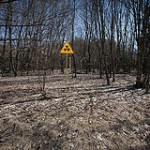 Summary of story from RFE/RL, April 26, 2011
On April 26, 1986, the powerful explosion that tore through Chernobyl’s nuclear power plant spewed radioactive material across large swathes of Ukraine, Belarus, and Russia.
Olha Bolyura, born in Tovstyj Lis, a Ukrainian village 11 kilometres away, was 32 at the time.
She says that of the 3,000 people who lived in the village before the accident, only a handful are still alive.
Her own family was exposed to massive doses of radiation. Her father died one year later and her brother, who helped clean up the contaminated wreckage, died four years ago after suffering a brain tumour and three strokes.
Her niece Natalya, who was a healthy teenager at the time of the accident, is severely disabled.
“She cannot walk. She is blind. …She drags herself through the house on her backside. Her legs have given out; her arms are weak. This is all because of Chernobyl,” Olha Bolyura says.
Like many in Ukraine and Belarus, she resents the Soviet government for initially covering up the disaster.
Now, 25 years later, she says authorities are deliberately playing down its long-term health effects.
The health effects of the Chernobyl disaster have long been subject to debate.
But Japan’s Fukushima disaster is an eerie backdrop to this Chernobyl anniversary.
The government of Japan, like that of the former Soviet Union, is being criticised for failing to accurately assess the severity and scope of its own meltdown.
Yury Bandazhevsky, the medical pathologist who was the first expert in Belarus to study the consequences of the Chernobyl disaster, says Japanese authorities now have their own unfolding health disaster.
And, he says, they are turning a blind eye to the true scale of the problem, just as authorities did a quarter-century ago with Chernobyl.
“Twenty-five years ago we were hearing the same things about the Chernobyl disaster,” he says.
“…There was no problem, …Chernobyl was safe.
“They really said almost nothing at all the first week. And then we found ourselves faced with a terrible nightmare.”
What a tragedy… so many people affected.. what can be done to stop this? We must prevent such an event from repeating itself.
I recently saw an interview where a panel of experts discussed what the US can learn from nuclear disasters of the past, and how we can work to prevent such tragedies. Here is the link to the video–
http://bit.ly/e02awE