


El Salvador reports alarming increase in femicides this year
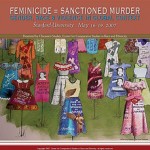 Summary of story from csmonitor, order May 23, there 2011
Human rights organizations in Latin America use the word ‘femicide’ to refer to the murders of women who are killed because of their gender.
Murders defined in this way typically involve sexual violence, medical mutilation, and torture, with the mangled bodies of victims often left in public places.
Non-governmental organization Salvadoran Women for Peace (Organizacion de Mujeres Salvadoreñas por la Paz – ORMUSA), which tracks violence against women, reported that, according to police statistics, there were 160 such murders committed in the country in the first three months of the year.
If this rate continues, they say, there could be 640 such killings in 2011 – the most since the organization began to track the issue in 1999.
Sexualized killings of women make up a relatively minor proportion of the many violent deaths in El Salvador – of some 4,000 murders the police registered in 2010, 580 were identified as femicides – but the brutality of the femicides is shocking.
And, as the deputy head of the police force said, the number of these attacks is rising “alarmingly”.
Guatemala has seen more than 4,400 women killed in such attacks over the last four years. Honduras has the second-highest femicide rate in Central America, according to some reports.
The reason why femicide happens is unclear: the growth of organized crime in recent years, or a culture where females are sometimes seen as property, so gangs use the killing and abuse of women to strike at their rivals.
Or the killings may reflect power relations between the genders, or maybe, because of human trafficking and illegal immigration through Central America and Mexico, there are vast numbers of vulnerable individuals whom no-one will report missing.
But currently one of the characteristics analysts can identify about these gender-based murders is that they often go unpunished, and even un-investigated.