


The tragedy of dairy farming near Japan’s now stricken nuclear power plant
 Summary of story from The Guardian, May 11, 2011
Namie, a radiation hotspot 17 miles downwind of Japan’s leaking Fukushima nuclear plant, has become a ghost town.
The fields, normally a hive of activity in this season, are deserted.
Roads are almost empty, apart from emergency vehicles and a police van that blocks the route into the 16 mile-radius exclusion zone.
Namie is just outside the government’s mandatory exclusion zone, but the ground was so contaminated during the crisis any residents are now exposed to almost as much radiation as someone standing outside the plant’s west gate.
But almost all of the 2,000 residents left after the explosion at the Fukushima Daiichi power plant on 15 March.
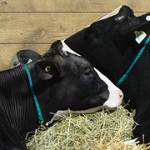
Keiko Sanpei and her husband were among a few dozen farmers who returned, more concerned for their cattle than their personal safety.
“I could hear the cows in my ears mooing. I couldn’t sleep. I was so worried,” she says, as one of the herd licks her arm. “We came back after a week.”
The radiation levels at her dairy farm can be more than five times the health limit.
“I was afraid when I first returned. But being with the cows, that fear goes away,” she says.
As a precaution, she mostly stay indoors, but she needs to go out to tend to the cows, though the milk has to be thrown away.
Shows of contrition from Tokyo Electric officials do not impress those whose homes and farms are irradiated.
“I am angry as a result of Tokyo Electric. Our lives have been turned upside down,” she says.
“We didn’t know very much about the nuclear power plant even though it was very close. But Tokyo Electric told us it was safe. They repeated that over and over.”