


Women in Nepal paid to preserve forests
 Summary of story from IPSNews, cialis July 4, 2011
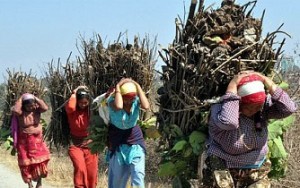
A financial incentive designed to help the environment in Nepal has also delivered a much-needed cash injection to women in one of the poorest countries in the world.
Two years ago, hundreds of forests user groups in remote districts of Nepal were told they could get paid for not cutting the trees in the forests that served as the source of fuel and fodder for their families in those areas.
In June they were informed that they had been awarded USD95,000.
Bina Tamang, the former secretary of the Palung women’s community forest in Dolakha, said: “The money will be an incentive for villagers to take better care of their forests.”
“We will use our share to augment our revolving fund, meant for assisting the neediest members.”
Spreading over just eight hectares, Palung forest cannot even provide the 65 families who live there with wood for such basics as windows.
Still, it is unique because all the users, including the 11-member committee that controls the revolving fund, are women.
“We cut the grass that grows in the forest for fodder and collect fallen or dead branches,” says one woman.
“Grazing livestock inside the forest is prohibited. So is logging. One member was fined seven dollars for cutting a tree.”
The story began in 2003 when the Netherlands government funded research into how communities living on forest produce could be taught to conserve the forests so that the trees could absorb carbon dioxide released on burning bio-fuels.
The research was conducted with regional partners in East Africa, West Africa, Papua New Guinea and the Himalayan region.
The International Centre for Integrated Mountain Development (ICIMOD) undertook the research in India and Nepal and in 2008, at the climate change talks in Poznan, Poland, proposed that a “Forest Carbon Trust Fund” be established for a pilot project in Nepal – Reducing Emissions from Deforestation and Forest Degradation Plus (REDD+).
“The Norwegian Agency for Development Cooperation gave seed money of 100,000 dollars for the fund,” said Bhaskar Singh Karky, resource economist at ICIMOD.
“We call it the carrot and sermon policy,” Karky added. “Timber is valued more than standing forests and the fund seeks to change that perception.
“The message to the forest users is that if you cut down a forest, we can’t penalise you but then you don’t get carbon money either.”
“We have to see now if the carbon money is a greater incentive than the value of felled timber,” said Karky. “We plan to take the concept to the market and ask international investors to invest as part of boosting their corporate social responsibility image.”
The three districts chosen to receive the first ever carbon payment in Nepal were singled out partly in recognition of their conservation work and partly for the inclusion of women, Dalits (formerly untouchable Hindu caste), indigenous communities and other disadvantaged groups.