


UN expert says rich countries not providing everyone with safe water
 Summary of story from UN news centre, September 16, 2011
A United Nations (UN) expert has said that three of the world’s most developed countries – the United States, Japan and Slovenia – are not providing their marginalised populations with safe water and sanitation.
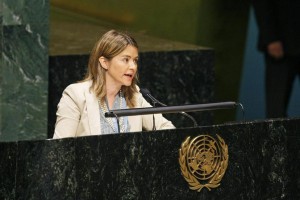
UN Special Rapporteur on the human right to safe drinking water and sanitation, Catarina de Albuquerque, said in releasing her report on her visit to the US earlier this year, that she was particularly shocked by what she saw in Sacramento, California.
She reported that, because the city had decided to shut down or to restrict the opening hours of public restrooms, homeless people were forced to improvise other types of solutions to be able to exercise the right to sanitation.
As a result, she said: “Open defecation, open urination have been criminalized. So what happens is that someone can be criminalized just because he/she does not have a place to do his physiological needs.”
She noted that people living in the US enjoy near universal access to safe water, but warned that an estimated annual funding gap of $4 to $6 billion for infrastructure in the sector raises the question of whether the system will carry the country into the 21st century.
She called for targeting policies to reach the hidden and poorest segments, noting that problems of discrimination in the US water and sanitation services may intensify in the coming years with climate change and competing demands for ever scarcer resources.
She cited parallel discrimination against the Korean minority in Japan and Roma in Slovenia.