


New research shows men and women think differently
 Summary of stories from Telegraph, Scotsman and PLoS ONE, January 5, 2012
A new scientific paper claims that the difference in the psychology of men and women is more complex than has previously been thought.
The team, led by Marco Del Giudice from the University of Turin, with Tom Booth and Paul Irwing from the University of Manchester, studied 5,000 men and 5,000 women.
Their study compared for the first time, multiple personality traits rather than individual ones; looking for patterns of similarities and differences in cognition, motivation, and behaviour.
What emerged was that strong traits associated with women included sensitivity, warmth and apprehension; whilst those for men included dominance, emotional stability and adherence to rules. Common to both sexes were: perfectionism, liveliness and abstractedness.
Dr Del Giudice, said: “We believe we made it clear that the true extent of sex differences in human personality has been consistently underestimated.”
Dr Paul Irwing, who co-authored the paper, believes the study could explain why certain professions, such as engineering, are dominated by a particular sex in spite of efforts by governments to promote equality.
Professor Janet Hyde from the University of Wisconsin, USA, whose influential 2005 ‘gender similarities hypothesis’ proposed that men and women have largely similar characteristics, said the researchers’ methods led to “uninterpretable” results and that “the scientific evidence still shows that, contrary to stereotypes, men and women are quite similar on a wide array of psychological qualities.”
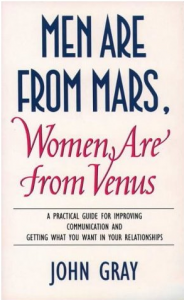
The research, ‘The Distance Between Mars and Venus: Measuring Global Sex Differences in Personality’, is published in the online journal PLoS ONE today.
Ugh! I cannot stand seeing these types of studies because there is absolutely no way that they can discern what is nature and what is nurture. There is no way to control for the influence of socialization. These studies don’t actually provide the information they claim to, on men and women’s “inherent” differences. Never mind the fact that binary gender/sex is a social construct to begin with.
All they end up doing is reinforcing the notion that women are inherently different from men (usually in really stereotypical ways) which is information that only allows people and institutions to continue being sexist because “science says so.”
I’ve not read the original article, but certainly this summary doesn’t seem to be talking about nature versus nurture.
I’m not so sure how much it matters. As you say, RachelA, it’s impossible to truly separate people from the influences of socialisation and the world around them. So, the results of this study still hold value, demonstrating common traits associated with men and women in today’s western societies.
It’s what we do with that information that I think is interesting….
Well, research is commissioned for a purpose. The impossibility of separating nature and nurture makes these studies pointless, yet still they are commissioned.
Newspapers like The Telegraph print the ones suggesting women are fluffy and stupid and The Guardian print the ones suggesting women are not fluffy and stupid. The right wing press dominates our media so, overall, we come out fluffy and stupid. Which is a shame, but at least it allows The Telegraph editors to feel good about all those editorials opposing equality. Fighting the good fight against political correctness and all that.
None of it has bears any relation to the truth, at least no-one can tell if it does.
Cordelia Fine’s “Delusions of Gender” describe very well how tainted this so call science is. She convincingly describes how even our unconscious inner stereotyping skews the results of those tests. Basically, if one is told that women are bad in Maths, women will do worse, so great is the influence of internalized stereotyping.
The book is a great read, very well researched but also engagingly written.
The whole issue is fascinating. Where it begins and ends is a point of endless and intriguing debate.
my concern about this work is that its presented in a muddled way. like this:
“The study could explain why certain professions, such as engineering, are dominated by a particular sex in spite of efforts by governments to promote equality, Dr Paul Irwing, of Manchester Business School, who co-authored the paper, said.
He added: “You find far fewer women in engineering and it is normally contended that you cannot explain this in individual differences, but that is on the assumption they are small and our study shows they are huge.”
you can draw contradicting conclusions from that. Makes me wonder about the purpose of the research.