


V-Day performances in Nairobi and Guam support moves to end VAW
 Helen Thompson
WVoN co-editor
February 14 is almost here again.
It’s time to profess love, reveal hidden passion, and expose your vagina in honour of V-Day.
Established in 1998, V-Day is a movement for ending violence against women (VAW) that evolved from American playwright Eve Ensler’s worldwide performances of Vagina Monologues.
Ensler says that many women shared their stories of sexual abuse after her performances, and from these conversations she realised that the play could be a force for change in exposing and ending sexual violence against women.
Based on interviews with women from diverse cultures, Vagina Monologues focuses on the experiences women have had with their bodies and particularly their vaginas.
From the raunchy, ‘My Angry Vagina” and “Reclaiming Cunt” to the poignant “My Vagina was my Village” and “Say It,” the monologues break the silence surrounding women’s sexual experiences and speaking out against sexual violence.
Every February, benefit performances of Vagina Monologues take place around the world with funds supporting local non-governmental organisations working towards ending sexual violence and the V-Day Spotlight Campaign.
The 2012 Spotlight Campaign focuses upon the women and girls of Haiti.
Thousands of V-Day events are taking place in 2012 from Mongolia to Saudi Arabia.
In Nairobi, Kenya, student Naomi Njeri Mwaura is part of the steering committee for a five-venue production across the city, including United States International University and Nairobi University in March.
Mwaura says: “With the high level of unemployment among the Kenyan youth . . . young people are willing to volunteer their time and skills towards helping in organizing, marketing, photography and blogging.”
However, she says that funding for the productions has been difficult to secure.
Domestic violence is a particular problem in Kenya because of the limited legal infrastructure to protect victims.
“In most cases, the woman is expected to stay in the violent marriage and avoid doing things that upset the husband to the point of marriage,” Mwaura says.
“If things get worse, the extended family will intervene and try to settle the marriage woes but nobody expects the woman to leave the marriage”
According to George Onyore William, a proposed Family Protection Bill will “provide the legal basis and framework for prosecuting domestic violence.”
The funds from the benefit performance will go to Nairobi Women’s Gender Violence Recovery Centre.
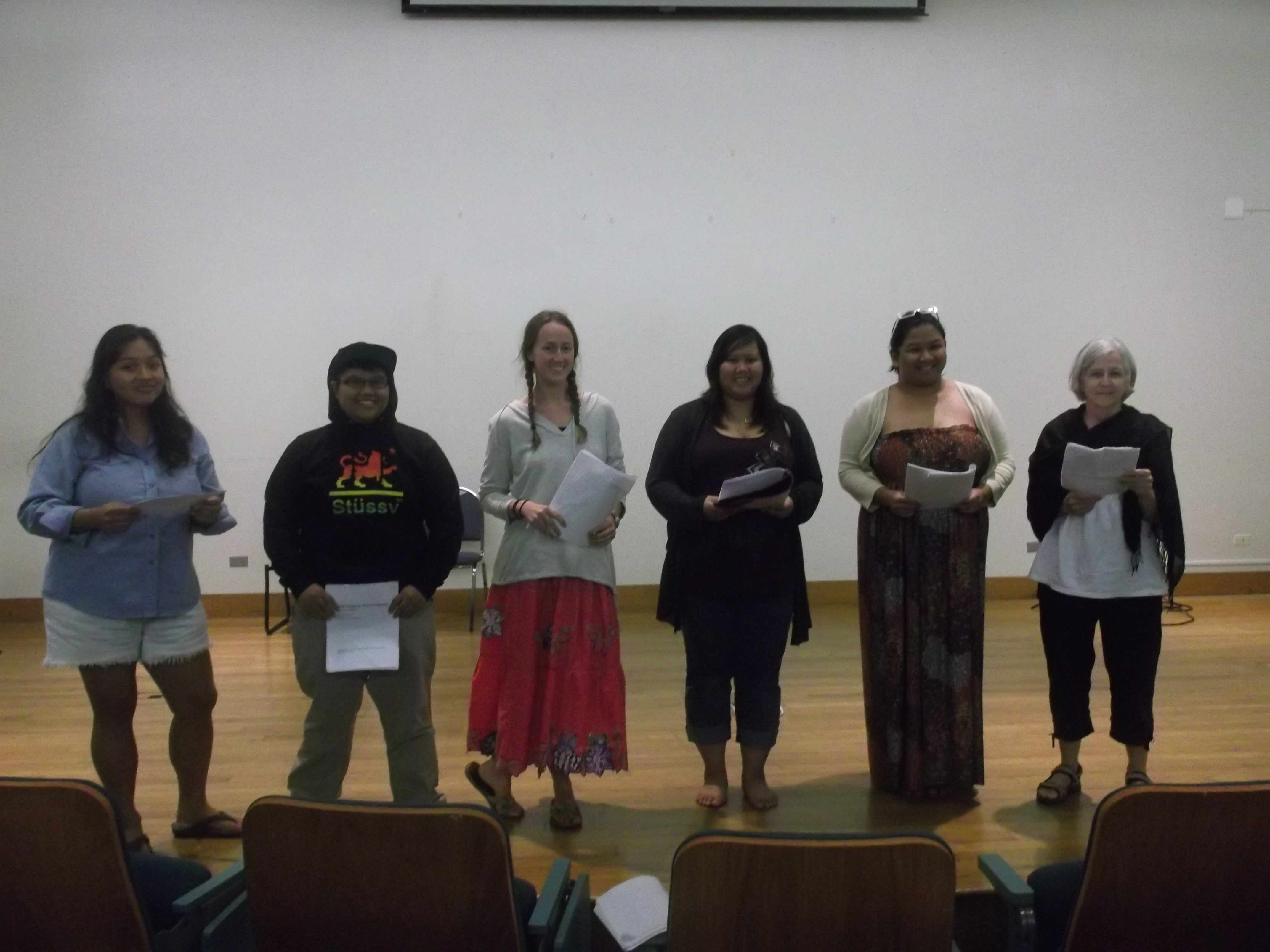
In the United States territory of Guam, Theatre Professor Michelle Blas is directing her second production of Vagina Monologues for a University of Guam and community audience.
The 2005 production spawned much controversy and protesters from the largely Catholic community picketing the theatre.
Blas says it may happen again this year, but she is encouraged that word is out and more women have auditioned for the 2012 performances.
Resistance, she says, has come specifically from men.
When a guest on a radio talk show, the male presenter argued that he needed to be convinced to go and see a production by and about women because he felt men were excluded.
Blas says, however, that men have a lot to gain from watching Vagina Monologues—more appreciation of the women in their lives and sometimes even a wake-up call to those men who are veering into abusive or potentially abusive behaviour.
The Vagina Monologues are, she says, empowering for men and women alike.
Directing the production also involves personal transformation, Blas explains, by allowing her to acknowledge and admit her own femininity from the humorous aspects of being a woman to overcoming the fear of the V-word.
Cast members too chart the personal importance of the work they are doing.
Wilma and Trinity Diosa, performers of “They Beat the Girl out of My Boy,” explained that performing a monologue about transsexual experience is empowering and speaks to their own experiences of transitioning from male to female.
Louresta Dodson-Lankard explains that “performing is very cathartic” because she can “act out the feelings” of her own experience as a battered child and offer the audience awareness and cleansing.
Sarah Gibson finds performing “Coochie Snorcher” joyful because, she says, every girl can find her own story in the monologue and see the potential for transformation.
Funds from the University of Guam production of Vagina Monologues will go to Erica’s House, Island Girl Power, Oasis Empowerment and Victims Advocates Reaching Out.
For her part, Mwaura hopes that the Kenyan productions will:
“strip away the shyness [and] shame that can often be associated with the female gender and just appreciate the importance of openly discussing issues around sex, especially in the African culture where the lack of transparency opens up an avenue for abuse and abusers.”
Juanita Blaz, director of Island Girl Power, one of the recipients of Guam V-Day funds, said in an interview in the Guam Pacific Daily News:
“It’s so important we learn to accept ourselves. We can only accept ourselves when we have a little bit of an open mind.”
For more information about the Nairobi productions, contact Naomi Njeri Mwaura at naomimwaura@ymail.com
The Guam production will be take place at the University of Guam Theatre, February 23-25 at 8:00 p.m. A production of original monologues is scheduled for March 1-3.