


Review: The New Suffragettes
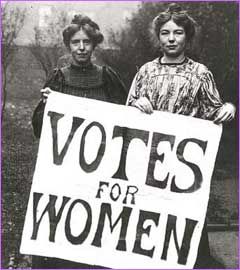 New e-book reminds us that the struggle for women’s suffrage continues.
Refreshingly, there was much positive hullaballoo surrounding the centenary of Emily Wilding Davison’s death.
Brutally mown down by King George V’s horse after running on to the track at the Grand Derby in Epsom on June 8 1913, Davison was a staunch and intelligent campaigner for women’s suffrage who had the gumption to hide in a broom cupboard in the Houses of Parliament on census night so that she could claim it as her address.
To mark the centenary of Davison’s death and inspire a thoughtful reflection on feminism around the globe in the modern age, the UK newspaper The Independent gathered together articles and interviews that celebrated women who are campaigning for equality, often endangering their lives in the process.
The result, entitled: ‘The New Suffragettes’, published in e-book form in July 2013, gives a brief but interesting sketch of various – worldwide – feminist actions.
From the off the narratives are powerful.
The first chapter, by journalist Yasmin Alibhai- Brown, opens the book with a potted biography of Emily Davison and a discussion of the complacency of women in the UK who do not vote, remarking that ‘complacency and indifference remain, and stain the very name of democracy’. Her piece continues by pointing out that ‘the stain is made worse by the truth that women in many countries crave and are literally dying for the vote and human dignity’.
The first piece’s discussion of the gang rape in rural Pakistan – ‘one of the worst places on Earth to be a woman’ – of then 30 year-old Mukhtar Mai, and her struggle to bring her attackers to justice when village elders had ordered the rape and the authorities were unwilling to prosecute, is illuminating.
Femen, who believe that ‘their main weapons in the fight against patriarchy in all its forms are their breasts’ get a look in, and say: ‘we, as women [..] tell him [Russian President Vladimir Putin] to f**k off to his face’.
Pussy Riot’s activities are also highlighted, with commentary provided by Shaun Walker arguing that ‘the women have suffered heavily for a brief performance inside Moscow’s biggest cathedral in February last year’, drawing attention to the heavy-handed and unjust judicial backlash by Russian authorities.
From a very important exploration of the newly politicised women who helped to shape Egypt during the uprising, to the campaign for women’s right to drive in Saudi Arabia; from an interview with Iranian women’s rights Nobel prize winning activist Shirin Ebadi to Malala Yousafzai’s campaign and being shot in the head by the Taliban… it is hard not to highlight each and every personal story contained within the book.
In recognition of my failure to do this I suggest that interested parties of both genders, but especially those who argue erroneously that gender equality has been achieved across the globe, read this often distressing but frequently inspiring, e-book. Who knows? You might just change your mind.