


Museum commemorates Rwandan genocide
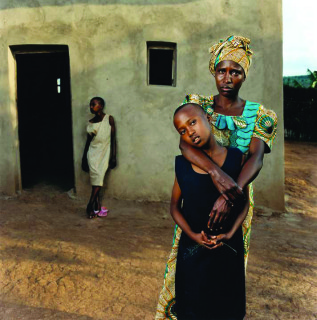 Powerful exhibition examines the relationship women systematically raped as part of the atrocity have with their resulting children.
Trigger Warning: The links in this piece include descriptions of severe sexual violence and killing.
A powerful new exhibition examining the origins, duration and legacy of the Rwandan genocide has opened in Coventry.
Set in the Herbert’s Peace and Reconciliation gallery, 100 Days: The Rwandan Genocide Twenty Years Later lends particular focus to the 500,000 women who were systematically raped as part of the atrocity and examines their relationship with the more than 20,000 children born as a result.
I attended the opening of this new installation, which was almost exactly 20 years after the genocide began, after a plane carrying the Rwandan president was shot down on 6 April 1994. The massacre which followed lasted for 100 days, killing over 800,000 Tutsis.
The new display at the Herbert uses photography, film and installation from a trio of international artists, to mark the anniversary of the conflict and gives voice to the women who survived the war by examining the concepts of courage, faith and acceptance.
The centerpiece of the display is Intended Consequences, a series of photographs taken by Jonathan Torgovnik over a three-year period.
At the opening of the exhibition a film which accompanies these works was shown, using powerful images and interviews with the female survivors of rape. This film and photo series completely stopped me in my tracks.
I was not the only one present moved to tears by the unutterable horrors narrated by these survivors.
The photographs not only focus on the brutal experiences of the women, but also on the relationships they have with the children born as a result. With searing honesty some admit to the complex feelings toward their children, conceived with such violence and pain.
A second installation, Due Diligence, by Brookie Maxwell, consists of thirteen hanging machetes.
The machete, which was a common tool found in many Rwandan homes, became the weapon of choice during the terror of the genocide.
In this work each machete has been engraved with words; on one side the steps of genocide are outlined, while on the reverse quotes from the perpetrators of the massacres stare starkly back at you.
I found this piece really hard to look at – seeing the instruments of such horrors so boldly displayed was unsettling; with the faces of the women who had survived looking out from their portraits over your shoulder, it is impossible to avoid the sheer inhumanity and terror which was unleashed during those 100 days.
The final piece in the exhibition is Untitled (Newsweek), a digital piece from Alfredo Jaar.
This commanding video draws attention to the lack of attention shown by the rest of the world during the genocide.
For each week that the massacre continued, the front cover of Newsweek is displayed, juxtaposed with an account of the developing situation and increasing body count in Rwanda.
So we see that in the week of 13 May, 1994, while an estimated 30,000 bodies washed down the Kagera River, the Newsweek cover displayed a story about ‘Men, Women and Computers: Is he as cute as his email? Bet she’ll love my war games!’.
In the week beginning 22 June, while the death count stood at 800,000, the rest of the world pondered over the innocence or guilt of OJ Simpson.
It is uncomfortable viewing, and forces an important critique of the news priorities of the West – a question which is arguably no less relevant today.
In Intended Consequences more than once the question is raised, ‘Where was the rest of the world when this happened to us?’
Where indeed?
It was this which led Kofi Anan to declare, ‘In their greatest hour of need, the world failed the people of Rwanda’.
The exhibition was put together by Shasti Lowton, Exhibitions and Collections Trainee at the Herbert. In her speech at the opening she said how in her academic research into genocides she often found that women’s voices were absent, and hoped that this small exhibition would give the opportunity and space for their voices to be heard.
While the installation takes up only a small amount of space in the gallery at The Herbert, it leaves an enormous impact on its viewer.
These works should absolutely be seen with a trigger warning, but they should absolutely be seen.
While the rest of the world has carried on, our lives barely touched by the events in Rwanda of 20 years ago, the women who survived live with their experiences daily, and their stories deserve to be heard.
‘100 Days: The Rwandan Genocide 20 Years Later’ will be exhibited in the Peace and Reconciliation Gallery at the Herbert Art Gallery and Museum in Coventry until 30 April 2015. Admission is free.
I understand this isn’t really the place for this, but I can’t see how else to let you know that articles in your RSS feed contain links to sites selling prescription drugs. Ie, your RSS feed seems to have been hacked.
Hi Stephen, yes we have just found out and are trying to sort it out. Thank you for letting us know.