


How to protect refugee women and girls from violence
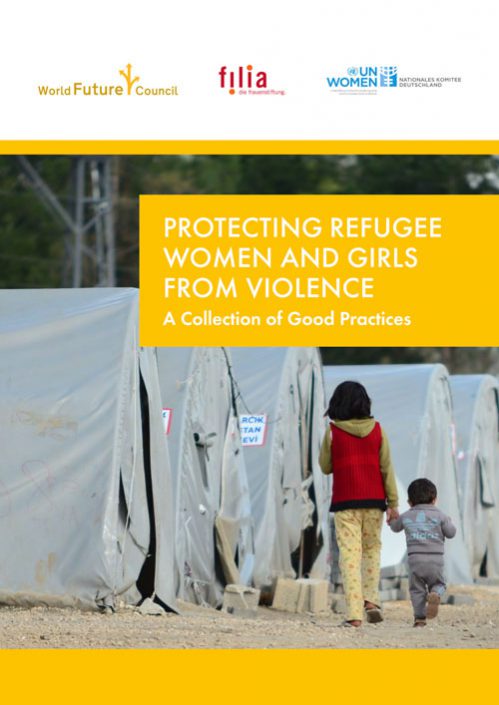 Best practices from around the world – and recommendations.
An increasing number of refugees worldwide are women and children.
In many cases, they are forced to leave their homes due to armed conflicts, insecurity or generalised violence.
For women and girls, their migration experience is shaped by some particular features, the roots of which lie in the gendered forms of violence they may face throughout their journey.
Some may leave their country of origin because of experiences of gender-based violence or in fear of such violence.
Without regular pathways to reach a country where they can seek international protection, women often have to resort to dangerous routes. During their journey, they are exposed to sexual and gender-based violence.
However, once they reach their destination, many women and young girls still face risks due to limited access to support services, a lack of effective procedures to identify survivors of gender-based violence and inadequate reception conditions in accommodation facilities.
The World Future Council, filia.die frauenstiftung and UN Women National Committee Germany has launched a 60-page report on good practices to better protect refugee women and girls in the EU.
Called ‘Protecting refugee Women and Girls from Violence’, it concludes with several recommendations:
Refugee women and girls should be provided with comprehensive information on their rights and the services they are entitled to in a language and manner that they can understand. Awareness-raising among refugee women themselves is a matter of legal empowerment and involves a bottom-up approach to equip women with the knowledge, confidence and skills to realise their rights.
Raising awareness on gender-based violence against refugee women and girls should take place at all levels. This includes reaching a wide range of target audiences such as reception and accommodation centre staff, healthcare practitioners, social workers, refugee communities, policy-makers, the general public and the media.
Women’s experiences should be the absolute centre of awareness-raising campaigns concerning them. Refugee women and girls should be included in the design and delivery of these campaigns, in order to be able to influence the policies and practices that affect their lives.
Women’s NGOs (especially refugee-led organisations) should assist in creating spaces for refugee women to meet and self-organise at a grassroots level. Sustainable funding should be provided to these organisations.
The vulnerability of refugee women and children should be taken into account in order to offer adequate reception conditions, including accommodation in women-only centres and centres for vulnerable persons on the basis of their informed consent. Women-only accommodation centres should create a “safe space” for single women and girls travelling alone or with their children, and offer a comprehensive and holistic range of services that are tailored to their needs and focus on enhancing their empowerment and independence.
Mobile units and day centres should be available in order to provide a temporary but crucial haven for women to receive support and information on their rights and access essential services. Sustainable funding should be provided to women’s organisations running these units and centres.
Private and decentralised housing solutions should be preferred over collective accommodation. Single refugee women travelling alone or with their children should be given priority when providing these housing options.
Collective reception and accommodation centres should, as a minimum, include separate rooms and sleeping areas with lockable doors as well as well-lit, gender-segregated and lockable sanitation and health facilities. All centres should have safe “women-only” private spaces for the provision of psychosocial support, trauma counselling, legal advice, and health care services. A zero tolerance policy against gender-based violence should be implemented and enforced within each centre.
The network of family and friends plays an essential role in stabilising and protecting women who experienced violence. This should be taken into account when distributing refugees among reception and accommodation centres. Existing networks should not be separated if this is not in accordance with their wishes.
Long-term solutions that go beyond emergency or temporary responses to reception need to be developed and implemented, i.e. access to individual and decentralised housing outside shelter infrastructures should be supported.
Services should be gender-sensitive and address the short- and long-term needs of refugee women and girls.
Refugee women’s voices and their complex and multi-layered narratives need to be taken into account. Services should focus on the empowerment of women and enhance their independence.
Women and girls should be informed about and guaranteed access to essential services throughout their migration route and upon arrival in host countries.
The provision of services needs to counter the multiple barriers that refugee women and girls may face when accessing services (i.e. linguistic and cultural barriers, infrastructural and institutional barriers, etc.), through the provision of low-threshold, culturally grounded, and linguistically appropriate services. Childcare options should be available to refugee women with children, since lack of childcare support is one of the main factors which impedes refugee women’s access to services.
Services should be provided by gender-sensitive staff that are trained on violence against women, gender equality, and women’s empowerment. Wherever possible, services should be provided by female professionals and through the help of female interpreters.
Services that target long-term needs of refugee women and girls in host countries beyond the initial reception response need to be available and should be funded in a sustainable manner.
Initiatives should foster intercultural exchange and encourage the formation of social networks that link female refugees to women in the host society.
Mentoring or “buddy” programmes that encourage the formation of one-to-one relationships should be launched and supported. Buddies should be carefully selected and receive specialised training and detailed information on issues of gender-based violence, the asylum procedure and local support services. This is to ensure that refugee women have contact persons who are adequately trained and can react appropriately in cases of violence.
The interaction of young refugee women and girls with those in their age group should be promoted. Initiatives applying a “peer-to-peer” approach support an informal, creative exchange among peers on an equal footing. These programmes encourage the formation of interpersonal relationships that meet the specific needs of young people and which offer constructive answers to age-specific questions (e.g. regarding life planning, education, parental conflicts, sexuality, etc.).
The voices and experiences of women with a refugee or migration background should be included in the planning and implementation of projects and their role as bridge-builders should be strengthened.
Initiatives should apply a low-threshold, culturally sensitive and linguistically appropriate approach in order to ensure access to and participation in these programmes.
The aim of this report is to suggest positive actions that international organisations, local, regional, or national authorities, civil society organisations and NGOs can take to better protect refugee women and girls from violence.
This is with the goal of promoting the exchange of good and promising practices and opening up a space for transnational dialogue, experience-sharing and peer-to-peer learning.
To read the full report, click here.
To send this article to your MP, click here.