


Tackling inequality in Scottish agriculture
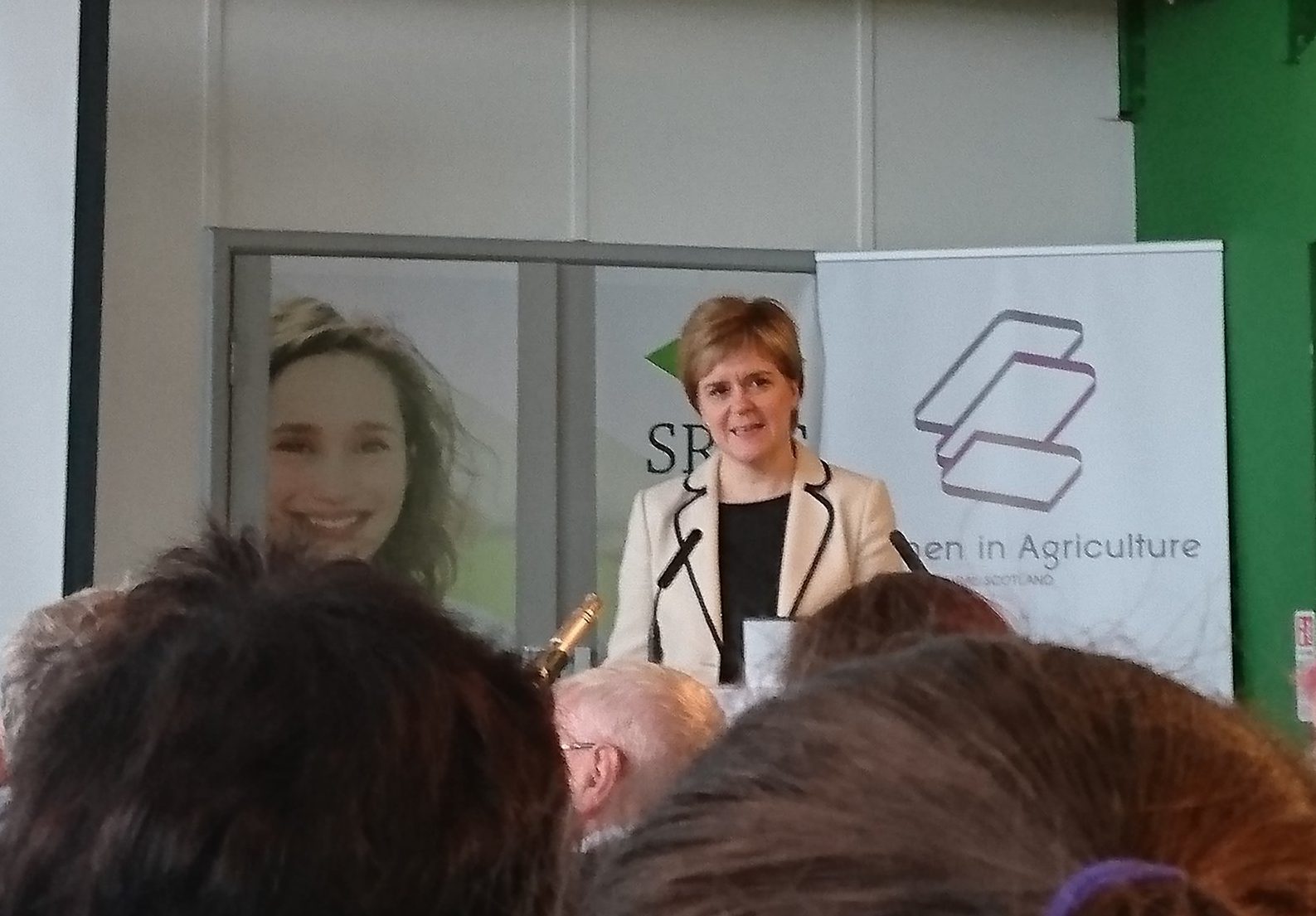 ‘The cultural practice of passing on large farms intact to one son needs to be challenged’.
The Scottish Government is to establish a Women in Agriculture Taskforce to consider issues such as better succession planning, more appropriate health and safety, better access to training and progression in the industry.
It will be co-chaired by Fergus Ewing MSP, Cabinet Secretary for Rural Economy and Connectivity, and Joyce Campbell, a working farmer and entrepreneur based in Sutherland.
Research and a report from Newcastle University and the James Hutton Institute, Women in Farming and the Agriculture Sector, commissioned by the Scottish government, was the first major investigation into issues facing women in the Scottish agricultural sector.
It investigated the role of women in farming and the agriculture sector in Scotland initially under five headings:
1 – Daily Life – to develop an understanding of farm women’s daily lives and the roles that women play in farming, both on and off the farm, and in relation to farm businesses.
2 – Aspirations – to investigate what women’s aspirations are in relation to farming, both amongst women who are farmers or in the agricultural sector, and others who choose off-farm work/careers.
3 – Career Paths – to identify the various career paths that women who are involved in farming and the agriculture sector take, and gain an understanding of the reasons underlying women’s eventual career outcomes.
4 – Leadership – to map women’s participation in agricultural organisations, and develop an understanding of the reasons for the low levels of female representation. To identify means of ensuring that women are better represented, and that women’s experiences and perspectives are better reflected, in the leadership and public face of the agriculture sector.
5 – Comparative analysis with other family businesses – to compare women’s experiences in the farming sector in Scotland with women’s experiences in family businesses in other sectors, to see whether and how the farming sector stands out.
In addition, during the course of the research other areas of importance emerged.
These were:
6 – Farm safety – an examination of how women manage child care responsibilities with farming full-time.
7 – Training – an examination of women’s access to training, continuing professional development and knowledge sharing.
8 – Inheritance – an examination of women’s access to land and how it affects their ability to enter the industry.
The main objective of this research was to establish a baseline position on women in farming and the agriculture sector, which then will influence future policies to enhance the role of women in these sectors going forward.
The reports key recommendations were:
That the cultural practice of passing on large farms intact to one son needs to be challenged. Other models should be explored – for example, in the rest of Europe it is not possible to disinherit other children. Increasing the discourse on inheritance practice, for example in farming organisations and the farming press, can lead to change in practices.
The cultural practice of passing on large farms intact to one son is the single biggest barrier to women’s entry into agriculture. This means of land transfer is institutionalised culturally, meaning it is a hegemonic practice but not legally: there is no legal restriction against multiple inheritance or bequeaths to daughters.
Succession planning is poor and families are reluctant to discuss it together. Access to professional advice on succession planning, as well as awareness raising and support, should be offered to all members of farm families.
The practice of only having one named tenant on a croft should be revisited to critically evaluate the gender implications. In an instance of divorce, spouses can lose access to the family home on the croft.
Conscious and unconscious bias needs to be addressed in farming organisations. A programme of measures is necessary and the following are recommended:
A 30 per cent quota system for farming organisation boards and committees;
Mechanisms to enable progression from the Scottish Association of Young Farmers Clubs, (SAYFC) to the National Farmers Union of Scotland Council such as mentorship, the establishment of a ‘young farmer’ or ‘new entrant’ council position;
Establishment of a ‘talent bank’ of suitably qualified women for farming positions, identifying their skills and interests, offering training opportunities, and encouraging farming organisations to recruit from this pool when positions became available;
Identifying women mentors to support male and female apprentices;
If women-only networks and activities are supported, this should be through mainstream farming organisations, and not as separate fringe events;
Practical, hands-on training programmes need to be developed and made accessible to women through flexible scheduling, childcare availability and on-line components. Topics of primary interest to study participants included: livestock husbandry, animal health, accounting, business entrepreneurship, large vehicle driving, environmental protection and legal compliance;
Women should be supported to pursue a range of farm diversification opportunities, at a variety of scales;
More land should be made available for new entrants, for example on Crown Estate Scotland land, from large estates of all ownership types, and through a ‘matching service’ with older farmers;
To increase farm safety, financial incentives, for farmers to purchase equipment appropriate for women and to encourage the use of childcare facilities, should be developed. Further research is needed to consider how to plan a farmyard for women and ageing farmers.
Speaking at the Royal Highland Show at the launch of the report, Scotland’s First Minister, Nicola Sturgeon, said: “This government has always placed equality at the heart of all it does, and it is absolutely right that fairness extends to all sectors of Scottish society.
“This report is a welcome insight into Scotland’s agricultural sector.
“While the report recognises the hugely valuable role that women play in our farming sector, it also highlights some significant challenges that are holding women back from playing an equal and equitable role in agriculture.
“And these need to be addressed.
“That is why I am delighted to announce this taskforce to look in-depth at the report’s recommendations to ensure the potential of women in farming is realised to better represent the forward-facing, 21st century Scotland in which we live.”
To see further details of the ‘Women in Farming and the Agriculture Sector’ report, click here.