


Nepal’s lost daughters fight back
 Summary of story from spiegel, March 25, 2011
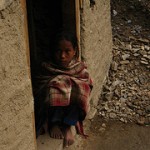
Urmila Chaudhary was sold into bonded labour when she was five years old.
Her family owed money to the landowner whose fields they farmed, there wasn’t enough food and the children wore shoes made of bean pods tied to their feet with pieces of rope. When he was offered four thousand rupees – a lot of money – Urmila’s brother agreed to the deal.
She liberated herself. Now 20, she works with a team of former victims, travelling throughout Nepal to free other girls from the clutches of their unrepentant masters.
In Nepali, the word kamalari means “hardworking woman.”
But these aren’t women being sold off and forced to work; they’re children between the ages of five and 15.
Thin-armed girls forced to work 14-16 hours a day in the households of families, fully at the mercy of their owners and exposed to their moods and their beatings. About one in 10 of the girls is sexually abused.
Aid organizations estimate that 10,000 girls work as kamalari in Nepal.
This despite that in 1956, I repeat 1956, the United Nations declared that child labour and bonded labour were slavery and should therefore be outlawed.
Roughly 27 million people across the world are victims of modern slavery – living in debt bondage, as forced prostitutes and as bonded labourers.
Between 40 per cent and 50 per cent of these are children, and many are in Asia.
When 600 girls in Tharu skirts traveled to Katmandu, the capital city, it was Urmila who spoke on their behalf to the president of Nepal.
“I wasn’t really all that nervous,” she says. “After all, I had something important to say to him.”
Soon afterwards, the Nepalese government announced its plan to provide €1.2 million to fund the training and reintegration of liberated girls.
And recently, the Ministry of Women, Children and Social Welfare approved a bill outlining the government’s child-protection policies, which ban the practice of kamalari.
Urmila’s district, Dang, has now been declared a kamalari-free zone.
The aid organization has placed a sign to let the residents in almost every village know about the changes.
But there is still a long way to go.