


Nigerian women stand for election despite the obstacles
 Summary of story from ipsnews April 7, 2011
Nigeria begins another phase of its staggered general elections on April 9 with 88 women standing for seats in Nigeria’s 109 member Senate and 218 vying for a place in the 360 member House of Representatives.
Four hundred and ninety-five women will be hoping to be voted into the 36 State Houses of Assembly, five women will be on the ballot for governor of the 36 states on April 26 and many male gubernatorial aspirants have women as running mates.
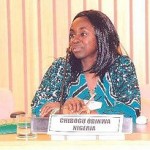
But Chibogu Obinwa, pictured, of the NGO Baobab for Women Human Rights, based in Lagos, said the overall representation of women in politics remains dismal.
Referring to commitments made at the 1995 World Conference on Women in Beijing, she pointed out that “We have not even reached near the 35 per cent affirmative action of the Beijing action which Nigeria endorsed.”
After the 2007 elections, Patricia Olubunmi Etteh was named as Speaker of the House, the highest political post achieved by a woman in Nigeria.
But Nigerian women who run for office still face numerous obstacles, ranging from a lack of funds to run an effective campaign, discrimination within the party, low levels of education and a slew of cultural and religious barriers.
“The society is patriarchal and believes in subordination of women in all aspects of life including the political scene,” Ms Obinwa explained.
And although Nigeria’s 1999 constitution protects women’s rights, women often find that in practice this guarantee is secondary to prevailing traditional and religious laws, and women who seek public office also encounter discrimination and resistance within the political parties.
However, she was optimistic, saying “We have come a long way and women activists have over the years advocated for increase in the number of women in positions of decision-making, whether elected or appointed.”
Abimbola Adeyeye, a female candidate who has been active in politics since 1993, feels that advocacy by women’s rights groups has led to the turnout of more women in this year’s election.
“I am encouraging women to come out and join politics. We need to prove ourselves that we can do it ,” she said.